Key Takeaways
- DIY Deck Building vs Hiring Professionals comes down to skill, time, and risk tolerance.
- Material costs are similar either way; labor savings shrink once tools and mistakes are counted.
- Attached and elevated decks usually require permits and inspections in Pennsylvania municipalities.
- Registered contractors in Pennsylvania must provide written contracts under state consumer protection law.
- A failed ledger connection is the most serious and expensive DIY mistake.
- Low, freestanding platform decks are the most realistic project for skilled weekend builders.
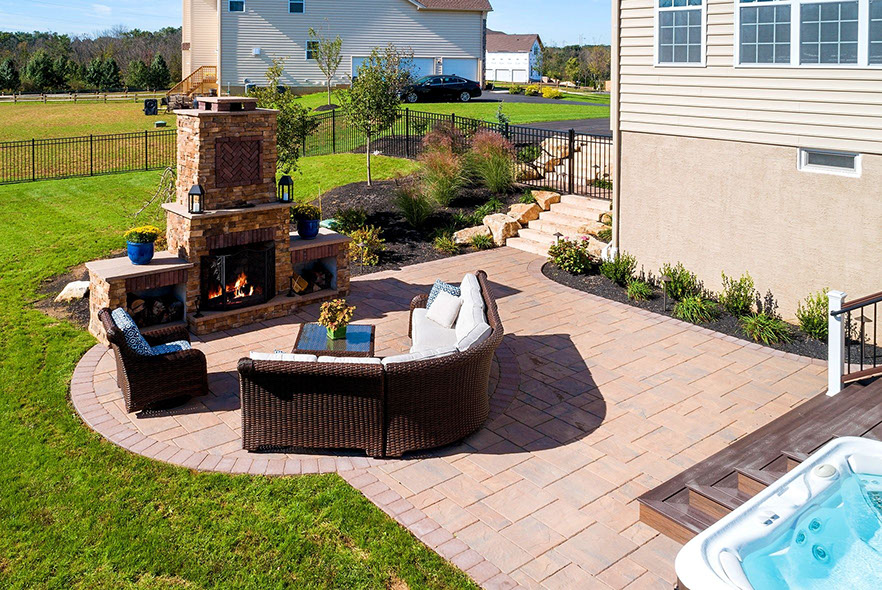
The quote from a deck builder lands in your inbox, and the labor line makes you wonder if you could just do it yourself. That question is the heart of DIY Deck Building vs Hiring Professionals, and the honest answer depends on far more than the price of lumber.
In this guide, you will learn what a deck really costs when you build it yourself, what you are actually paying for when you hire a pro, and how to decide which path fits your project. We will also cover permits, common DIY mistakes, and the red flags to watch for when you start calling deck contractors near me.
What Goes Into the True Cost of a Deck
Every deck, whether self-built or contractor-built, has the same core cost buckets. The difference is who absorbs each one.
Costs You Pay Either Way
- Materials: framing lumber, decking boards, railings, stairs, footings, and hardware.
- Permits and inspections: fees set by your township or borough. Understanding local permit requirements is essential before budgeting.
- Design decisions: size, height, material choice, and features like built-in benches or lighting.
Costs That Only Show Up With DIY
- Tools: a miter saw, circular saw, impact driver, post hole digger or auger, levels, and string lines. Some you own, many you will buy or rent.
- Waste and re-cuts: first-time builders typically order extra material to cover errors.
- Your time: a crew may finish in days what takes a homeowner several weekends.
- Rework: failed inspections mean tearing out and redoing work.
- Disposal: dumpster or haul-away for scraps and old decking.
Costs That Only Show Up With a Pro
- Labor and overhead: wages, insurance, licensing, vehicles, and equipment.
- Profit margin: the business has to stay in business to honor its warranty.
The key insight is that the labor line on a quote is not pure profit. It covers insurance, experience, and accountability you would otherwise carry yourself.
DIY Deck Building vs Hiring Professionals: Side-by-Side Comparison
| Factor | DIY Deck | Professional Deck Installation |
|---|---|---|
| Upfront cash outlay | Lower labor cost, higher tool cost | Higher, but usually one predictable price |
| Material pricing | Retail pricing | Often contractor pricing through suppliers |
| Timeline | Several weekends to a full season | Often days to a few weeks once permitted |
| Permit handling | You file plans and schedule inspections | Contractor typically handles paperwork |
| Code compliance risk | Higher, especially regarding critical structural connections like ledgers and footings | Lower with experienced, licensed crews |
| Warranty | None on labor | Workmanship warranty per contract |
| Insurance if someone is hurt | Your homeowner’s policy | Contractor’s liability and workers’ comp |
| Resale perception | May raise buyer and inspector questions | Permit records and contractor docs help |
| Best fit | Low, freestanding, simple decks | Attached, elevated, multi-level, or composite builds |
Pros vs. Cons of Building a Deck Yourself
Pros
- Save on labor if you already own most tools.
- Full control over schedule, design changes, and material choices.
- Real satisfaction and new skills.
Cons
- Steep learning curve for footings, ledger attachment, and stair layout.
- Mistakes are expensive and sometimes hidden until they fail.
- No labor warranty, and you carry all safety risk.
- Projects often stretch far beyond the planned timeline.
Pros vs. Cons of Hiring Local Deck Builders
Pros
- Faster build with a crew that knows local code.
- Permit and inspection process usually handled for you.
- Workmanship warranty and liability insurance.
- Access to design experience and better material sourcing.
Cons
- Higher upfront price.
- Scheduling depends on the builder’s season and backlog.
- Quality varies widely, so vetting matters.
Pennsylvania Permits and Code: Why They Change the Math
Pennsylvania uses the PA Uniform Construction Code (UCC), which adopts the International Residential Code from the International Code Council. In many municipalities, decks attached to the house or built more than 30 inches above grade require a permit and inspections. Requirements vary by township, so always confirm with your local code office before you start.
The American Wood Council publishes a widely used prescriptive guide for residential wood decks (AWC Deck Construction Guide), known as DCA 6. It covers footing sizes, joist spans, ledger fastening, and lateral load connections. If you are going the DIY route, this guide is essential reading.
Here is where conditional reasoning matters:
- If your deck is low, freestanding, and simple, a skilled DIYer can often handle it with a permit check and careful planning.
- If your deck attaches to the house, sits high off the ground, or includes stairs and multiple levels, hiring professional deck builders in Pennsylvania is usually the safer financial decision.
- If you plan to sell within a few years, permit records and contractor documentation can make the buyer’s inspection go more smoothly.
How to Decide: A Step-by-Step Process
- Define the project. Measure the space and decide the size, height, and whether it attaches to the house.
- Call your municipality. Ask what permits, drawings, and inspections are required.
- Price the materials. Build a full material list including hardware, flashing, and footings.
- List your tool gaps. Add the cost of buying or renting what you do not own.
- Estimate your hours honestly. Then double it for a first-time build.
- Get three written quotes. Ensure you verify their licensing from licensed deck contractors for the same scope.
- Compare the real totals. Subtract DIY costs from the lowest solid quote. That number is what you are paying yourself for the labor and the risk.
- Decide based on risk, not just price. If the gap is small, the pro wins on warranty and safety alone.
Do / Don’t List for Homeowners
Do
- Do confirm permit requirements before buying any materials.
- Do use fasteners and connectors rated for treated lumber.
- Do flash the ledger board properly to keep water out of your house framing.
- Do get every contractor quote in writing with a clear scope.
Don’t
- Don’t nail a ledger to the house; it needs proper bolts or structural screws per code.
- Don’t set footings shallower than your local frost depth.
- Don’t skip the inspection, even on a small deck.
- Don’t choose a contractor on price alone.
Red Flags When Choosing Deck Installation Companies
Not every deck building service near me is created equal. Watch for these warning signs during vetting:
- No Pennsylvania registration. Under state consumer protection laws, most home improvement contractors must register with the Pennsylvania Office of Attorney General and list their registration number on contracts.
- No written contract. State law requires written home improvement contracts with specific details, including your right to cancel within three business days.
- Large cash deposits upfront with pressure to sign the same day.
- Asking you to pull the permit in your name so they avoid inspection responsibility.
- No proof of insurance when you ask for a certificate.
- Vague scope, such as “build deck, 12×16” with no material or hardware details.
The trusted Bucks County experts and across the region will welcome these questions instead of dodging them.
Real-World Scenario
A homeowner in Bucks County decides to build a 12×16 pressure-treated deck attached to the back of his house. He buys materials, rents an auger, and spends four weekends framing it.
At the framing inspection, the inspector flags the ledger. It was fastened with nails, and the flashing was missing. He also finds two footings shallower than the local frost depth. The homeowner has to remove decking, re-dig footings, and refasten the ledger.
By the time the deck passes, he has spent extra on materials and rentals, lost most of a summer, and still has no warranty. When he compares his final spend to the original quote from a local deck builder, the savings are far smaller than he expected. The quote he turned down would have included all of that fixed the first time.
When DIY Actually Makes Sense
DIY Deck Building vs Hiring Professionals is not a one-size answer. Building it yourself can be the right call when:
- The deck is low to the ground and features a freestanding (floating) design.
- You already own the major tools and have framing experience.
- You have flexible time and no hard deadline.
- You are comfortable pulling permits and working with inspectors.
If two or more of these do not apply to you, a professional build is likely the better value.
Quick Answers:
Is it cheaper to build a deck yourself?
A: Usually the upfront labor savings are real, but tools, rework, permits, and time often narrow the gap. For complex or attached decks, the difference can be smaller than homeowners expect.
Do I need a permit to build a deck in Pennsylvania?
A: Many Pennsylvania municipalities require permits for decks attached to the house or more than 30 inches above grade. Always confirm with your local township or borough code office.
What is the most common DIY deck mistake?
A: Improper ledger attachment and missing flashing are among the most serious. These can lead to water damage or structural failure.
How long does it take a professional to build a deck?
A: Many standard decks are built within days to a few weeks after permits are approved. Size, materials, and weather affect the schedule.
How do I find licensed deck contractors near me?
A: Check the Pennsylvania Attorney General’s home improvement contractor registration, read local reviews, and ask for proof of insurance. Get at least three written quotes.
Does a professionally built deck add more resale value?
A: Permit records and contractor documentation help buyers and inspectors trust the structure. Unpermitted DIY work can raise questions during a sale.
Can I do part of the work myself to save money?
A: Some contractors allow homeowners to handle demolition or staining. Ask upfront and get the arrangement in your written contract.
Are composite decks harder to DIY?
A: Composite boards follow manufacturer-specific spacing and fastening rules that affect the warranty. Many homeowners find professional installation worth it for composite builds.
Glossary of Terms
Ledger Board: The board that attaches a deck to the house. It carries a large share of the deck’s load and must be bolted and flashed correctly.
Footing: The concrete base that supports deck posts. It must sit below the local frost line so it does not shift in freeze and thaw cycles.
Joist: The horizontal framing members that support the deck boards. Their size and spacing determine how strong and stiff the deck feels.
Pressure-Treated Lumber: Wood treated with preservatives to resist rot and insects. It requires corrosion-resistant fasteners and hardware.
Conclusion
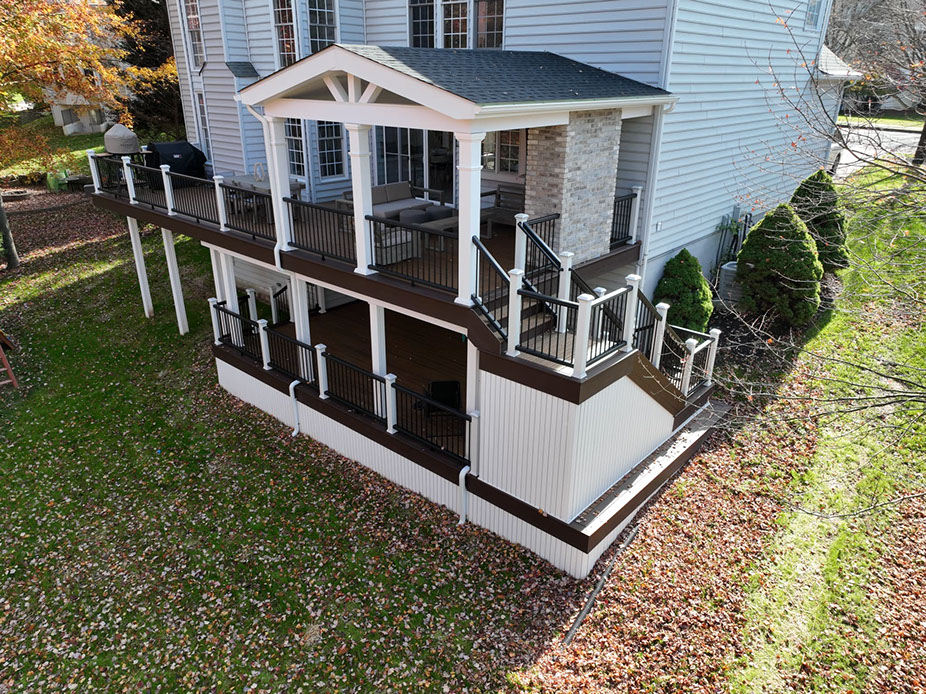
The real question in DIY Deck Building vs Hiring Professionals is not who charges less. It is who carries the risk, the time, and the responsibility if something goes wrong. For simple, low decks, a skilled homeowner can save money. For attached, elevated, or composite decks, hiring a professional often costs less than it looks once tools, rework, and peace of mind are counted.
Ready to see what your deck would actually cost? Reach out to trusted local deck builders in Bucks County to request your free estimate and compare it against your DIY numbers before you buy a single board.