KEY TAKEAWAYS
- The best decking material for PA weather depends on sun, shade, and moisture exposure.
- Freeze-thaw cycles punish poor drainage, shallow footings, and unsealed wood more than anything else.
- Capped composite and PVC resist moisture well but need proper gapping for temperature swings.
- Pressure-treated lumber stays affordable but needs regular sealing to survive Pennsylvania winters.
- Pennsylvania requires most home improvement contractors to register with the Attorney General’s office.
- Skipping permits or asking for large cash deposits are major red flags when hiring.
Introduction: Why Pennsylvania Weather Changes the Decking Conversation
A deck that looks great in a sunny Arizona catalog can fall apart after a few winters in Allentown or Pittsburgh. Pennsylvania throws nearly every type of weather stress at outdoor wood and composites: hard freezes, sudden thaws, wet springs, sticky summers, and snow that sits for days.
That’s why choosing the best decking material for PA weather is less about picking the “strongest” board and more about matching the material to how your specific yard behaves. In this guide, you’ll learn how the state’s climate affects decks, how the main materials compare, what experienced local deck builders do differently, and which red flags to watch for when hiring.
How Pennsylvania’s Climate Affects Your Deck
Pennsylvania sits in a humid continental climate zone, according to general climate data from NOAA and the National Weather Service. In practical terms, that means four real seasons, and each one works against your deck in a different way.
Freeze-Thaw Cycles
Water soaks into small cracks in wood, around fasteners, and into the soil beneath footings. When it freezes, it expands. When it thaws, it contracts. Repeat that dozens of times per winter and you get split boards, popped screws, and posts that shift.
The soil matters too. Footings that sit above the local frost line can be lifted by frost heave. Pennsylvania’s Uniform Construction Code (UCC) requires footings to extend below the frost depth, and that depth is set by your municipality. In much of the state it’s commonly 36 inches or deeper, so always confirm with your local code office.
Humidity and Summer Heat
Humid summers keep wood damp longer, which invites mildew, mold, and eventually rot. Dark composite boards in full sun can also get uncomfortably hot underfoot, which matters if you have kids or pets.
Snow Load and Winter Maintenance
Heavy, wet snow adds weight to the framing. Shoveling and ice melt add wear to the surface. Some materials handle plastic shovels and certain de-icers well, while others scratch or stain easily. Always check the manufacturer’s care guide before you salt anything.
Shade and Tree Cover
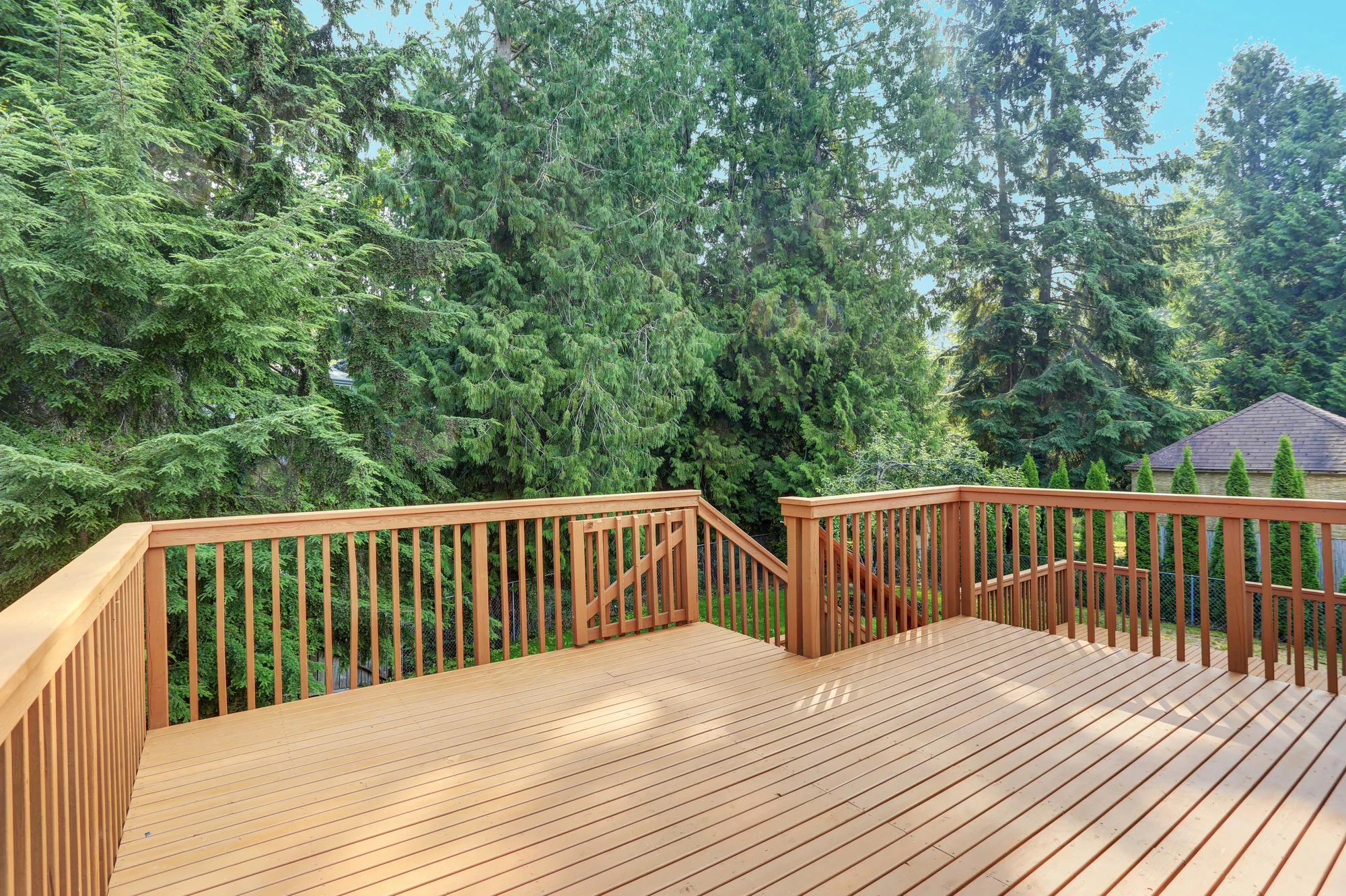
Many Pennsylvania backyards sit under mature oaks and maples. Shade means slower drying, falling debris, and tannin stains. A deck under heavy tree cover needs a different plan than one in open sun.
The Best Decking Material for PA Weather: A Side-by-Side Comparison
There’s no single winner. Here’s how the most common options perform in Pennsylvania conditions.
| Material | Moisture & Rot Resistance | Freeze-Thaw Performance | Maintenance Level | Upfront Cost | Best Fit |
|---|---|---|---|---|---|
| Pressure-treated pine | Good when sealed | Fair; prone to checking and cracking | High (clean and seal regularly) | Low | Budget builds, framing |
| Cedar | Naturally resistant | Fair to good | Moderate to high | Moderate | Natural look, low-traffic decks |
| Capped composite | Very good | Good with proper gapping | Low | Moderate to high | Busy families, shaded yards |
| PVC (cellular vinyl) | Excellent | Good; expands more with heat | Low | High | Wet areas, poolside, low upkeep |
| Tropical hardwood (e.g., ipe) | Excellent | Very good | Moderate (oiling if you want color) | High | Premium builds, long lifespan |
Nearly all of these surface materials still sit on a pressure-treated wood frame. Framing lumber should carry a ground-contact treatment rating when it’s near soil or hard to replace, per guidance from the American Wood Council.
Pros vs. Cons: Wood vs. Composite in Pennsylvania
Pressure-Treated Wood
Pros
- Lowest upfront cost
- Easy to repair or replace individual boards
- Widely available from local suppliers
Cons
- Needs regular cleaning and sealing to resist moisture
- Checks, splits, and warps through freeze-thaw cycles
- Can splinter as it ages
Capped Composite
Pros
- Resists moisture, mildew, and rot well
- No sanding, staining, or sealing
- Consistent color that fades slowly
Cons
- Higher upfront cost
- Can get hot in direct summer sun, especially darker colors
- Requires exact gapping and fastener use per manufacturer specs
Choosing the Right Material for Your Yard
Your yard’s conditions should drive the decision. Use this reasoning as a starting point.
- If your deck sits under heavy tree cover, choose capped composite or PVC. They resist mildew and tannin staining far better than bare wood.
- If your budget is tight and you don’t mind yearly upkeep, pressure-treated pine is a practical choice, as long as you commit to sealing it.
- If your deck faces south with no shade, pick a lighter-colored composite or PVC to reduce surface heat.
- If you want the longest possible lifespan and a natural look, tropical hardwood is worth the higher cost.
- If your deck is close to the ground, ventilation matters more than surface material. Low decks trap moisture, so ask about airflow and framing protection.
When deciding the best decking material for PA weather, remember that installation quality usually matters as much as the board itself. A premium composite installed with poor gapping can buckle, while a well-built pressure-treated deck can last for years.
How Professional Deck Builders in Pennsylvania Build for Climate
Experienced professional deck builders in Pennsylvania follow a process designed around the state’s weather. Here’s what a solid build typically looks like.
- Pull the right permits. Most municipalities in Pennsylvania require a permit for attached decks and for many freestanding ones. Permits trigger inspections that protect you.
- Dig footings below the frost line. Footings should go below the depth your municipality requires, which prevents frost heave from lifting posts.
- Use rated framing lumber and compatible fasteners. Treated lumber is corrosive to some metals, so builders use hot-dip galvanized or stainless steel hardware as recommended by the American Wood Council.
- Flash the ledger board properly. Where the deck attaches to the house, flashing keeps water out of the rim joist. This is one of the most common failure points on older decks.
- Protect the framing. Joist tape on top of joists helps shed water and can extend frame life.
- Follow manufacturer gapping and joist spacing. Composites and PVC expand and contract with temperature. Many manufacturers call for tighter joist spacing on diagonal board layouts.
- Plan for drainage and airflow. Proper grading under the deck and adequate ventilation keep moisture from sitting on the structure.
- Walk you through winter care. A good contractor explains which shovels and ice melt products are safe for your specific material.
The North American Deck and Railing Association (NADRA) also encourages homeowners to have decks inspected regularly, which is especially smart in freeze-thaw regions.
Do’s and Don’ts for Pennsylvania Deck Owners
Do
- Clear snow with a plastic shovel, pushing along the length of the boards
- Clean leaves and debris often, especially in fall
- Check ledger connections and posts every spring
- Reseal wood decks on the schedule your stain or sealant recommends
- Keep gutters clean so roof water doesn’t pour onto the deck
Don’t
- Use a metal shovel on composite or PVC boards
- Assume any rock salt is safe for your surface
- Let planters or furniture sit in one spot all winter, trapping moisture
- Ignore soft spots, wobbling rails, or rusted hardware
- Power wash wood at high pressure, which can damage the fibers
Red Flags When Hiring Deck Contractors Near Me
Searching for “deck contractors near me” or “deck building services near me” brings up plenty of options. Not all of them are equal. Pennsylvania doesn’t issue a statewide contractor license for home improvement work, but the Home Improvement Consumer Protection Act requires most home improvement contractors to register with the Pennsylvania Office of Attorney General. Some cities, including Philadelphia, also require their own licenses. That’s what people usually mean when they search for licensed deck contractors.
Watch for these red flags when comparing deck installation companies:
- No registration number. Registered contractors must include their number on contracts and advertising.
- Large upfront cash deposits. State law generally caps deposits on jobs over $1,000 at one-third of the contract price, plus the cost of special-order materials.
- No written contract. Pennsylvania requires written contracts for most home improvement jobs, along with a three-day right to cancel.
- “We don’t need a permit.” Skipping permits can create problems with insurance, resale, and safety.
- No proof of insurance. Ask for a certificate of liability insurance before work starts.
- Vague answers about footings. If a builder can’t explain your local frost depth, keep looking.
Checking these points helps you separate trustworthy local deck builders from fly-by-night crews. You can verify registration through the Attorney General’s website before you sign anything. Reputable deck construction companies in Pennsylvania will share this information without hesitation.
Real-World Scenario
A homeowner in Doylestown had a 12-year-old pressure-treated deck on the north side of their house, shaded by two large maples. The boards were soft in spots, covered in mildew, and several posts had shifted after a hard winter.
While comparing the best deck builders in Bucks County, the homeowner asked each contractor about footing depth, ledger flashing, and material choice. The contractor they hired found the original footings were too shallow and the ledger had no flashing. The new deck used footings set below the local frost line, flashed ledger connections, joist tape, and a light-colored capped composite surface.
For a shaded, damp yard like this one, the combination of better structure and a moisture-resistant surface solved both the mildew problem and the shifting posts. That’s the real answer to the best decking material for PA weather: the right board, installed the right way.
Quick Answers: FAQ
What is the best decking material for PA weather?
A: Capped composite and PVC handle Pennsylvania’s moisture and freeze-thaw cycles well with low maintenance. Pressure-treated wood works for tighter budgets if you seal it regularly.
How deep should deck footings be in Pennsylvania?
A: Footings must go below your local frost depth, which your municipality sets under the Uniform Construction Code. In many areas this is 36 inches or more.
Do I need a permit to build a deck in Pennsylvania?
A: Most municipalities require a permit for attached decks and many freestanding decks. Check with your local code office before construction starts.
Are deck contractors licensed in Pennsylvania?
A: Pennsylvania doesn’t have a statewide license, but most home improvement contractors must register with the Office of Attorney General. Some cities, like Philadelphia, require additional licensing.
Can I use rock salt on a composite deck?
A: It depends on the manufacturer. Many recommend specific ice melt products and warn against others, so check your board’s care guide first.
How often should I seal a wood deck in Pennsylvania?
A: Follow the directions on your stain or sealant. Many homeowners reseal every one to three years, depending on sun, shade, and foot traffic.
Does composite decking get too hot in summer?
A: Darker composite colors can get hot in direct sun. Lighter shades and shaded locations help keep surfaces more comfortable.
How long does a deck last in Pennsylvania?
A: Lifespan depends on material, installation quality, and maintenance. A well-built deck with proper footings and flashing lasts far longer than one built with shortcuts.
Glossary of Terms
Frost line: The depth at which the ground freezes in winter. Footings placed below it resist being pushed up by frozen soil.
Frost heave: Upward movement of soil caused by freezing water. It can lift posts and footings that aren’t deep enough.
Ledger board: The board that attaches a deck to the house. It needs proper flashing and fasteners to prevent water damage and failure.
Capped composite: Composite decking wrapped in a protective polymer shell. The cap improves resistance to moisture, stains, and fading.

Conclusion
Pennsylvania’s climate is tough on decks, but it’s predictable. Freeze-thaw cycles, humidity, snow, and shade all point to the same lessons: choose a material that fits your yard, build on footings that go below the frost line, and protect the structure from water.
Capped composite and PVC offer the lowest upkeep, pressure-treated wood keeps costs down, and hardwood delivers longevity at a premium. Whatever you choose, the builder matters just as much as the board.
Ready to build a deck that holds up to Pennsylvania weather? Contact [Business Name] today for a free consultation and a plan built around your yard, your budget, and your local code.