Key Takeaways
- The deck builder vs general contractor choice depends on your project’s scope and complexity.
- Specialized deck builders focus on footings, ledger connections, framing, and outdoor materials every day.
- General contractors fit best when a deck is part of a bigger home addition or remodel.
- Pennsylvania home improvement contractors generally must verify their registration with the state Attorney General’s office.
- Always confirm permits, insurance, and a detailed written contract before any work begins.
- Vague quotes, cash-only demands, and pressure to skip permits are serious red flags.
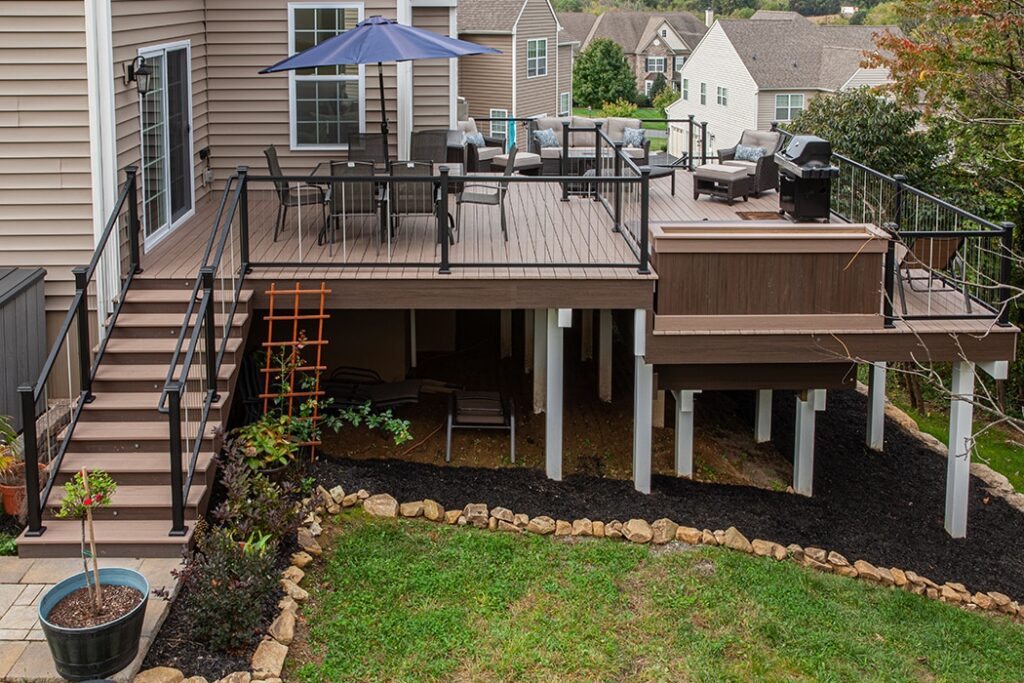
A deck looks simple from the patio door. It’s a few posts, some joists, and boards on top. But the deck builder vs general contractor question matters more than most homeowners expect, because a deck carries real loads, sits in the weather year round, and is often attached directly to your house.
Hire the wrong type of contractor and you can end up with loose ledger boards, poor drainage, or a build that fails inspection. Hire the right one and you get a structure that stays solid and good looking for years.
In this guide, you’ll learn what separates a specialized deck contractor from a general contractor, when each one makes sense, how to vet candidates in Pennsylvania, and which red flags should send you elsewhere.
What Does a Deck Builder Actually Do?
A deck builder is a contractor who focuses mainly or entirely on outdoor living structures. That usually means decks, railings, stairs, pergolas, and sometimes covered porches.
Because they build decks week after week, local deck builders tend to know the details that make or break a project:
- How deep footings need to go below the frost line in your area
- How to flash and fasten a ledger board so water stays out of your home’s rim joist
- Which joist spacing works with composite versus wood decking
- How hidden fasteners, railing posts, and stair stringers should be installed per manufacturer specs
Many professional deck builders in Pennsylvania also work with composite brands regularly, which can matter for warranty coverage. Some manufacturers require installation according to their guidelines for the product warranty to apply. If you are unsure which material is right for you, it helps to compare wood and composite options to understand the long-term benefits of each.
What Does a General Contractor Do?
A general contractor (GC) manages construction projects of many types: kitchens, additions, basements, roofing coordination, and more. A GC often hires subcontractors for specialized work like electrical, plumbing, or framing.
That broad skill set is a real strength on big, multi-trade projects. A GC can schedule trades, pull multiple permits, and keep a whole renovation on track.
The tradeoff is focus. Some general contractors build excellent decks. Others build one or two a year, or pass the job to a subcontractor you never meet. That’s not automatically bad, but it means you need to ask who will actually do the work.
Deck Builder vs General Contractor: Side-by-Side Comparison
| Factor | Specialized Deck Builder | General Contractor |
|---|---|---|
| Core focus | Decks, railings, stairs, outdoor structures | Wide range of home construction |
| Deck-specific experience | Usually high, built into daily work | Varies widely by company |
| Material knowledge | Deep familiarity with wood and composite systems | General, may be less current on deck products |
| Design input | Often offers layout, railing, and lighting ideas for decks | Broader design input across the whole home |
| Who does the work | Usually in-house deck crews | May use subcontractors |
| Best fit | Standalone new decks, deck replacements, upgrades | Decks tied to additions, sunrooms, or major remodels |
| Project coordination | Simple for deck-only jobs | Strong for multi-trade projects |
When to Choose Each Option
The right answer depends on what you’re actually building. Here’s how the reasoning plays out.
If your project is a new deck, a deck replacement, or a resurfacing job, choose a specialized deck builder. You’ll get a crew that knows the structure inside out and can guide you on materials and layout.
If the deck is attached to a new home addition, sunroom, or screened room that involves electrical, roofing, and interior work, a general contractor is often the better lead. One company coordinating every trade reduces scheduling gaps and finger pointing.
If you want a multi-level deck, building on a steep slope, or a large composite build with complex stairs and railings, lean toward an experienced deck contractor. These projects reward specialization.
If you already trust a GC who is remodeling your kitchen and they have a strong deck portfolio, keeping the work with them can make sense. Just ask to see completed deck projects, not only interiors.
Pros vs. Cons
Specialized Deck Builder
Pros
- Deep experience with footings, framing, ledger attachment, and railings
- Current knowledge of composite and wood decking systems
- Often faster on deck-only projects
- In-house crews are common, so quality is more consistent
Cons
- Not set up for interior work or large additions
- Popular local deck builders may book out months ahead in spring and summer
General Contractor
Pros
- One point of contact for multi-trade projects
- Can handle additions, structural changes, and interior connections
- Useful when the deck is a small part of a bigger plan
Cons
- Deck experience varies widely between companies
- The deck may be subcontracted to a crew you didn’t vet
- Pricing may include a management markup on subcontracted work
How to Hire the Right Deck Contractor: Step by Step
- Define your scope. Decide on size, height, attachment to the house, stairs, and preferred materials. A clear scope helps you compare quotes fairly.
- Build a shortlist. Search for deck building services near me, ask neighbors, and check local reviews. Look for companies with photos of finished decks similar to yours.
- Verify registration and insurance. In Pennsylvania, most home improvement contractors must register with the Office of Attorney General under the Pennsylvania Home Improvement Consumer Protection Act. Ask for proof of liability insurance and workers’ compensation coverage.
- Ask about permits. Many townships in Bucks County and across Pennsylvania require permits and inspections for decks under the Pennsylvania Uniform Construction Code. A licensed deck contractor should handle this or tell you clearly who will.
- Compare detailed written quotes. Each quote should list materials, footing details, railing type, fasteners, timeline, payment schedule, and warranty. Review what to look for in a quote to ensure nothing is missed.
- Ask who does the work. Find out whether in-house crews or subcontractors will build your deck.
- Review the contract carefully. Pennsylvania law requires written contracts for most home improvement work. Read the cancellation terms, start date, and total price before signing.
Do’s and Don’ts When Hiring a Deck Builder
Do
- Check the contractor’s Pennsylvania home improvement registration number
- Ask for references from deck projects completed in the last couple of years
- Request a copy of the permit before construction starts
- Get material brands and colors written into the contract
- Ask how the ledger board will be flashed and fastened
Don’t
- Pay the full amount upfront
- Accept a one-line quote that just says “build deck”
- Let anyone talk you out of a required permit
- Hire based on price alone
- Assume a GC builds the deck in-house without asking
Red Flags to Watch For
Whether you’re talking to deck installation companies or general contractors, certain warning signs show up again and again. Watch for:
- No registration number listed on the contract or marketing materials
- Pressure to sign the same day or “lock in” a discount
- Requests for cash only or large deposits before any materials arrive
- No proof of insurance, or reluctance to provide it
- Suggestions to skip the permit “to save time”
- No physical address or verifiable local reviews
- Unclear answers about footing depth or how the deck attaches to your home
These are serious red flags when hiring a deck contractor. To protect yourself, prepare by reviewing these essential questions to ask your deck contractor.
The Better Business Bureau and the Pennsylvania Office of Attorney General both offer consumer guidance on checking contractors and filing complaints if something goes wrong.
Real-World Scenario
A homeowner in Doylestown wants to replace an aging pressure-treated deck with a 400 square foot composite deck and new railings. A general contractor who is also remodeling their bathroom offers to add the deck to the job.
The homeowner asks to see past decks and learns the GC would subcontract the work to a crew they haven’t used before. They also get quotes from two local deck builders. One provides a detailed proposal covering footing depth, ledger flashing, joist spacing for composite, and a specific railing system, plus photos of similar finished projects nearby.
The homeowner chooses the specialized deck builder for the deck and keeps the GC on the bathroom. Each project goes to the contractor best suited for it, and the deck passes inspection on the first visit.
Why Codes and Standards Matter
Deck failures often trace back to the same few problems: weak ledger connections, undersized footings, and poorly secured railings. The American Wood Council publishes a widely referenced Prescriptive Residential Deck Construction Guide (DCA 6) based on the International Residential Code, and many building officials use it as a reference.
The North American Deck and Railing Association (NADRA) also promotes safe deck building practices and regular deck inspections, such as using the NADRA Deck Safety Checklist. A contractor who can talk comfortably about these standards is usually one who builds to them.
Quick Answers:
Is a deck builder better than a general contractor?
A: For a standalone deck project, a specialized deck builder is usually the better fit because of focused experience. For a deck tied to a larger addition or remodel, a general contractor may be more practical.
Do I need a permit to build a deck in Pennsylvania?
A: Many Pennsylvania municipalities require a permit for decks under the Uniform Construction Code. Check with your local township or borough before work begins.
Do deck contractors need to be licensed in Pennsylvania?
A: Pennsylvania doesn’t issue a statewide contractor license, but most home improvement contractors must register with the Office of Attorney General. Some municipalities have additional local requirements.
Do general contractors build decks themselves?
A: Some do, and some subcontract the work. Always ask who will physically build your deck.
How do I find the best deck builders in Bucks County?
A: Look for local deck builders with Pennsylvania registration, proof of insurance, recent deck photos, and verifiable reviews. Compare at least two or three detailed written quotes.
What should a deck quote include?
A: A good quote lists materials, footing details, railing and stair specs, fasteners, permit responsibility, timeline, payment schedule, and warranty terms.
What are the biggest red flags when hiring a deck contractor?
A: No registration number, no insurance proof, large cash deposits, pressure to skip permits, and vague quotes are the most common warning signs.
Can I hire a deck builder and a general contractor for the same home?
A: Yes. Many homeowners use a GC for interior remodeling and a specialized deck builder for the outdoor structure.
Glossary of Terms
Ledger board: The board that attaches a deck to the house. Proper flashing and fastening keep it secure and keep water out of your home’s framing.
Footing: The concrete base that supports a deck post. In Pennsylvania, footings typically need to sit below the local frost line.
Composite decking: Decking made from a blend of wood fibers and plastic. It needs less upkeep than wood and must be installed to the manufacturer’s specs.
Subcontractor: A tradesperson or company hired by the main contractor to complete part of a project, such as framing or electrical work.
Conclusion
The deck builder vs general contractor decision comes down to scope. For a new deck, a replacement, or an upgrade, a specialized deck builder usually brings sharper skills, better material knowledge, and fewer surprises. For a deck that’s part of a larger addition or remodel, a general contractor can tie every trade together.
Either way, verify Pennsylvania registration, confirm insurance, insist on permits, and get everything in writing. Those steps protect your home and your investment.
Planning a new deck or replacing an old one? Contact our team to talk through your project, review material options, and request a free estimate from licensed deck contractors who build decks every day.