Key Takeaways
- Searching for deck installation near me should lead to licensed, insured local contractors.
- Professional deck builders handle permits, inspections, and structural requirements — not just materials.
- A complete service includes site prep, framing, decking, railings, and final cleanup.
- Red flags include contractors who skip permits, demand full payment upfront, or provide no written contract.
- If you need a low-maintenance deck, composite materials offer long-term value over pressure-treated wood.
- Bucks County homeowners benefit from working with local deck builders familiar with Pennsylvania code requirements.
What Does “Professional Deck Installation” Actually Mean?
When homeowners search for deck installation near me, they often expect to get quotes on materials and labor. But a truly professional service is a structured process that starts well before the first board is cut and ends well after the last screw is driven. Understanding what full-service deck construction companies actually provide helps you evaluate bids more accurately, ask better questions, and avoid contractors who cut corners.
This guide breaks down every phase of professional deck installation — from the first design conversation to the final inspection — so you know exactly what you’re paying for.
Phase 1: Initial Consultation and Design
Licensed deck contractors don’t show up with a nail gun and start swinging. The process begins with a site visit and design consultation. During this phase, a professional will:
- Evaluate the property’s topography, soil conditions, and existing structures
- Discuss the homeowner’s functional goals (entertaining space, hot tub support, pool access, multi-level design)
- Review material options including pressure-treated lumber, composite decking, PVC, and hardwood
- Provide a detailed written proposal with itemized costs
This consultation is where the scope of work gets defined. A contractor who skips this step is a red flag — rushing into a build without a design plan often leads to structural problems, code violations, or costly change orders later.
Phase 2: Permits and Code Compliance
Professional deck building services near me include permit acquisition as a standard part of the job — not an optional add-on. In Pennsylvania, most decks over 30 inches above grade or attached to the home require a building permit. Bucks County follows the Pennsylvania Uniform Construction Code (PA UCC), which sets standards for footings, ledger attachment, joist sizing, and railing height.
What’s covered in this phase:
- Submission of construction drawings to the local municipality
- Verification that the design meets local zoning setbacks
- Scheduling of required framing and final inspections
- Coordination with the homeowner on inspection timelines
If a contractor tells you permits aren’t necessary for your project — and your deck is attached to the house or elevated — that’s a serious red flag. Unpermitted decks create problems at resale, may not be covered by homeowner’s insurance, and can be ordered torn down by local authorities.
Phase 3: Site Preparation and Footings
Before any framing begins, the site must be prepared. This includes:
- Layout and staking — marking the perimeter and footing locations
- Excavation — digging below the frost line (in Pennsylvania, the frost depth is typically 36–42 inches)
- Footing installation — pouring concrete footings that meet local code
- Ledger attachment — anchoring the deck frame to the house with proper flashing to prevent moisture infiltration
Footings are the foundation of the entire structure. Professional deck builders in Pennsylvania understand that improper footing depth is one of the leading causes of deck failure — particularly in freeze-thaw climates where the ground heaves each winter. The International Residential Code (IRC) and Pennsylvania’s adopted building codes both specify minimum footing requirements.
Phase 4: Framing and Structural Assembly
With footings cured, the structural framing begins. This phase includes:
- Beam and post installation — the primary load-bearing structure
- Joist installation — the lateral members that support the decking surface
- Blocking and bridging — added for lateral stability and to prevent joist rotation
- Hardware installation — joist hangers, post caps, and structural screws rated for the application
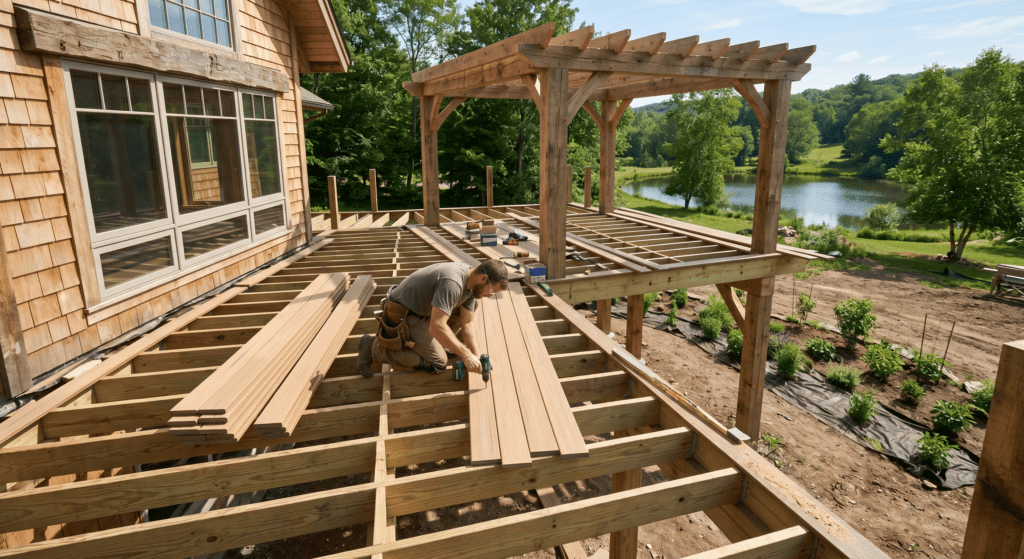
Framing is the phase where the structural integrity of the deck is either built right or compromised. A deck that looks beautiful on the surface can still be dangerous if the framing is undersized, improperly connected, or built with the wrong materials. This is why the framing inspection — typically required before decking begins — is a critical checkpoint.
Phase 5: Decking, Railings, and Stairs
Once framing passes inspection, the visible portion of the deck comes together. Professional deck installation companies manage:
- Decking board installation — properly spaced, fastened, and finished
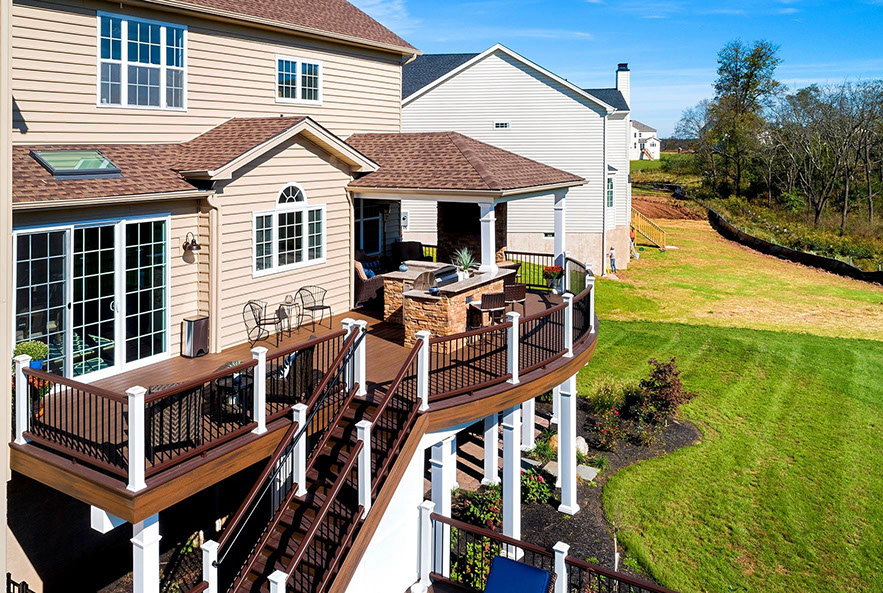
- Railing systems — code-compliant height (42 inches for decks over 30 inches above grade in Pennsylvania), baluster spacing, and post attachment
- Stair construction — including stringers, treads, risers, and handrails meeting egress requirements
- Fascia and trim — finishing details that give the deck a clean, polished appearance
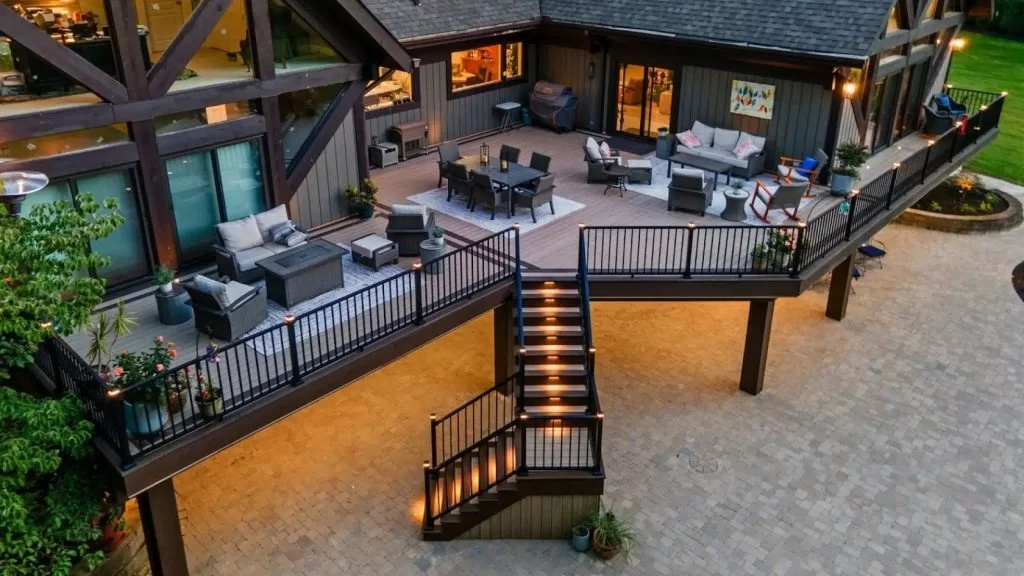
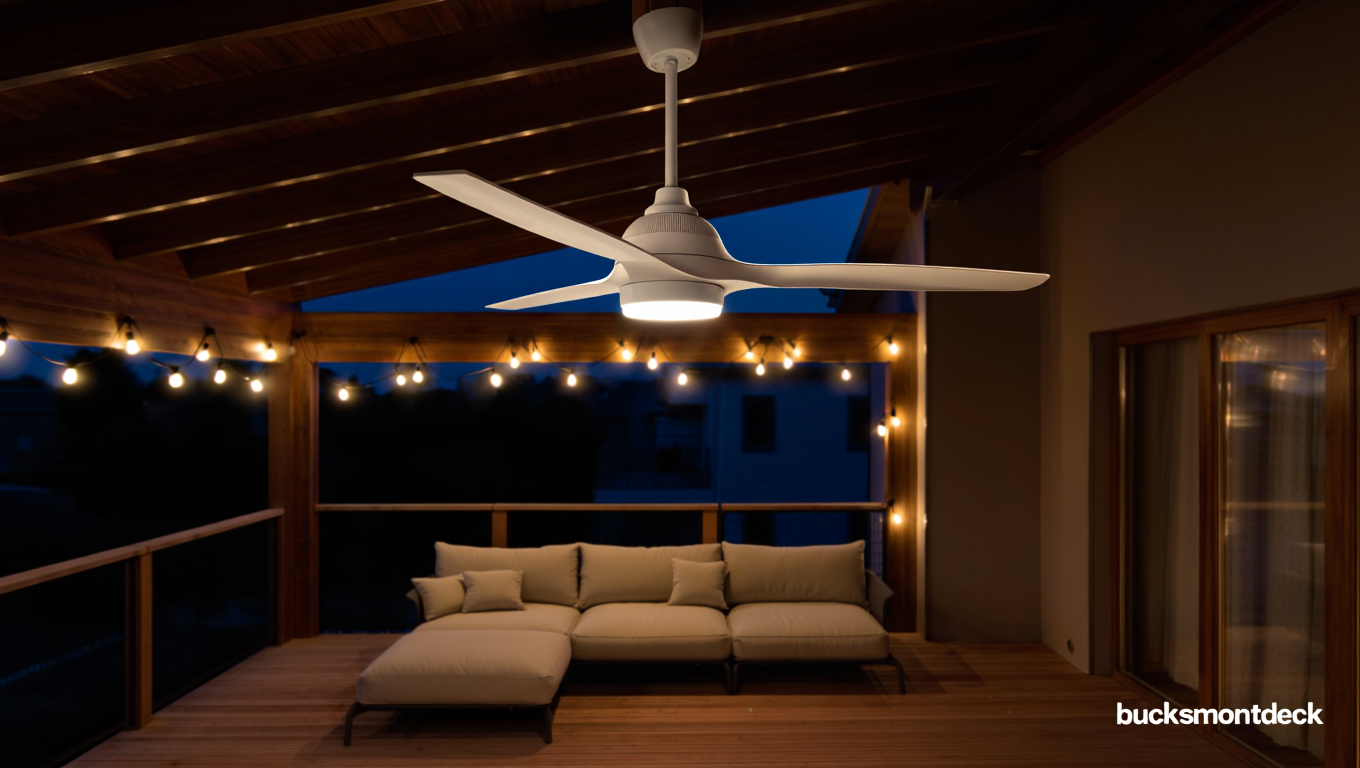
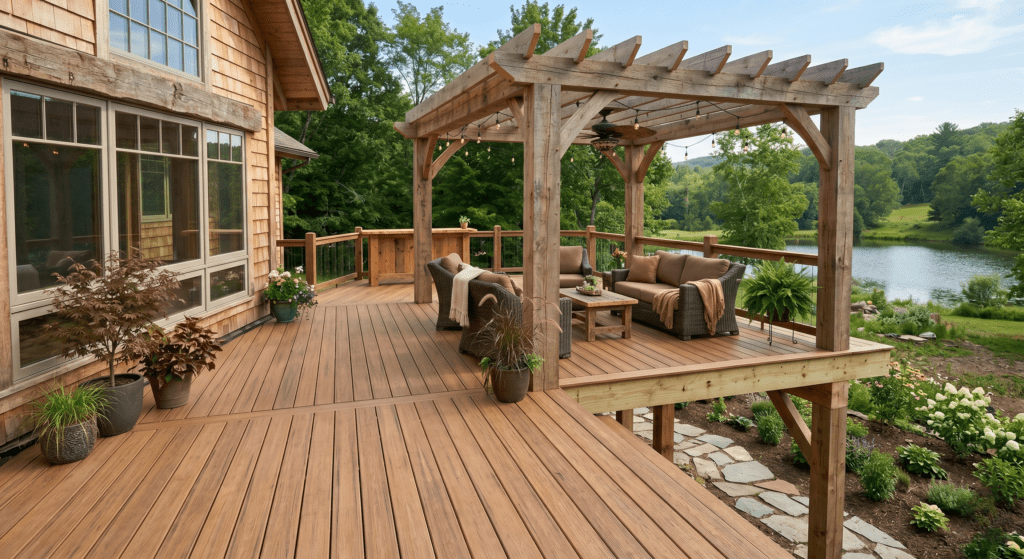
If the homeowner has requested features like built-in benches, pergolas, lighting rough-ins, or cable railing systems, those are installed during this phase as well.
Material Comparison: Pressure-Treated vs. Composite Decking
| Feature | Pressure-Treated Wood | Composite Decking |
|---|---|---|
| Upfront Cost | Lower | Higher |
| Maintenance | Annual sealing/staining | Minimal |
| Lifespan | 10–15 years (maintained) | 25–30 years |
| Appearance | Natural wood look | Consistent, varied styles |
| Eco-Friendliness | Varies by treatment | Often recycled content |
| Splinter Risk | Yes | No |
| Best For | Budget builds, rural settings | High-traffic, low-maintenance needs |
If you want minimal long-term maintenance, choose composite. If you’re working with a tight upfront budget and plan to maintain the deck regularly, pressure-treated lumber is a proven option. Most professional deck builders Bucks County homeowners hire will offer both.
Pros and Cons of Hiring Local Deck Builders vs. Large National Companies
Pros of Local Deck Builders:
- Familiarity with Pennsylvania and Bucks County permit requirements
- Easier communication and faster response times
- Local reputation at stake — accountability is higher
- May offer better pricing due to lower overhead
Cons of Local Deck Builders:
- Smaller crews may have longer lead times during peak season
- Fewer resources for very large or complex projects
Pros of National Deck Installation Companies:
- Standardized processes and warranties
- Larger crews for faster completion
- May have dedicated design software and showrooms
Cons of National Companies:
- Less familiarity with local code nuances
- Customer service may be less personalized
- Pricing can be higher due to corporate overhead
Do’s and Don’ts When Hiring Deck Contractors Near Me
DO:
- Request a written contract with scope, timeline, and payment schedule
- Verify the contractor carries general liability and workers’ compensation insurance
- Ask for references from recent local projects
- Confirm permits will be pulled before work begins
- Get at least three competitive bids
- Review essential questions to ask your deck contractor to ensure thorough vetting
DON’T:
- Pay more than 30–40% upfront before work begins
- Hire based solely on price — the lowest bid often signals missing scope
- Skip reviewing the final inspection sign-off
- Accept verbal-only agreements
- Ignore online reviews or Better Business Bureau complaints
Red Flags to Watch for in Deck Installation Quotes
Even among licensed deck contractors, some warning signs are worth watching for during the hiring process. Here are the top Red Flags to Watch for when evaluating bids:
Red flag #1 — No mention of permits. As noted above, most attached or elevated decks in Pennsylvania require a permit. If the quote doesn’t reference permits, ask directly.
Red flag #2 — Vague scope of work. A professional proposal specifies materials by brand or grade, dimensions, hardware type, and finish details. “Build a deck” is not a scope of work.
Red flag #3 — Full payment required upfront. Reputable deck installation companies structure payments in milestones — typically a deposit, a mid-project payment, and a final payment upon completion.
Red flag #4 — No physical business address. Storm-chasing contractors occasionally target residential areas after weather events. Verify that the company has an established local presence.
Red flag #5 — No written warranty. Professional builders stand behind their work with a written workmanship warranty. Materials warranties come from the manufacturer; labor warranties come from the contractor.
The Martinez Family Deck Project
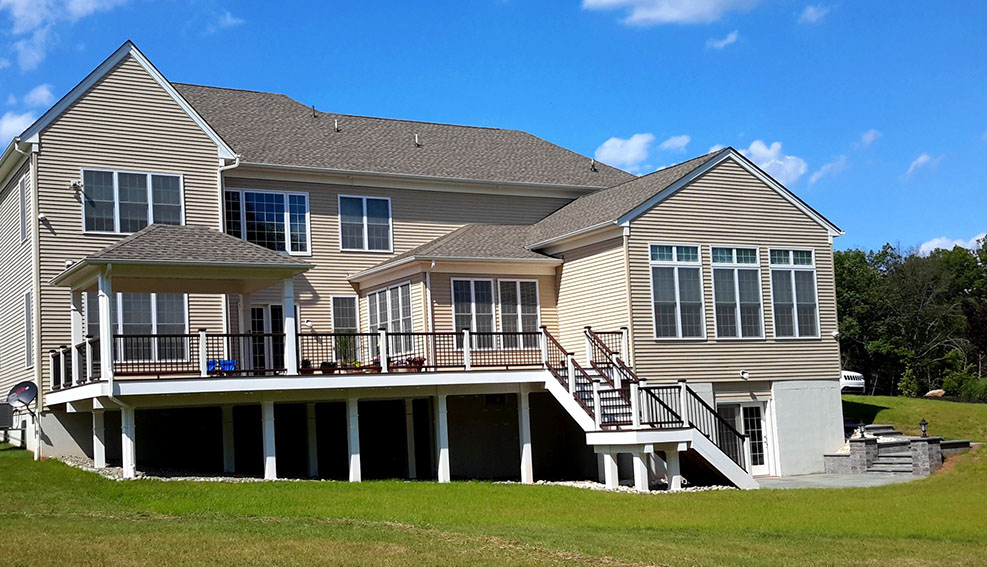
The Martinez family in Doylestown, PA wanted a 400-square-foot composite deck off their back door with stairs leading to their backyard. They collected three bids from deck building services near me and noticed one was 40% lower than the others. On closer review, the low bid excluded permit fees, used unlisted decking materials, and required 70% payment upfront. They went with the mid-range bid from a licensed local contractor who itemized every component, pulled the permit, passed framing inspection, and completed the project in 12 business days. The deck passed final inspection without issue.
Quick Answers — FAQ
What does deck installation near me typically include?
A: Professional deck installation includes design consultation, permit acquisition, site preparation, structural framing, decking and railing installation, and final cleanup. The scope varies by contractor, so always request an itemized proposal.
Do I need a permit for a new deck in Pennsylvania?
A: In most cases, yes. Decks attached to the home or elevated more than 30 inches above grade generally require a building permit under the Pennsylvania Uniform Construction Code. Your contractor should handle this process.
How long does a professional deck build take?
A: Most residential decks take between 5 and 15 business days to complete, depending on size, complexity, and weather. Permit approval timelines can add additional time before construction begins.
What’s the difference between deck contractors and handymen?
A: Licensed deck contractors carry proper insurance, pull permits, and build to code. Handymen may offer lower prices but often lack the credentials and experience to meet structural and safety requirements.
How much does deck installation cost in Bucks County, PA?
A: Costs vary widely based on size, materials, and complexity. Industry professionals generally estimate pressure-treated decks at a lower per-square-foot cost than composite, but composite saves money in long-term maintenance. Always get multiple itemized bids.
What warranty should I expect from a professional deck builder?
A: Most reputable local deck builders offer a workmanship warranty of one to five years. Material warranties are provided separately by the manufacturer and can range from 10 years to lifetime for premium composite products.
How do I verify a deck contractor is licensed in Pennsylvania?
A: You can verify contractor registration through the Pennsylvania Attorney General’s Home Improvement Contractor (HIC) registration database. All contractors performing home improvement work over $500 in Pennsylvania must be registered.
What materials last the longest for outdoor decks?
A: Capped composite decking and PVC decking products offer the longest lifespan with minimal maintenance — many carry 25–30 year warranties. Pressure-treated wood is durable but requires ongoing maintenance to achieve comparable longevity.
Glossary of Terms
Ledger Board: A horizontal board anchored directly to the house that serves as one side of the deck’s frame. Improper ledger attachment is one of the most common causes of deck collapse.
Frost Line: The depth below ground at which soil freezes in winter. In Pennsylvania, footings must be set below the frost line — typically 36 to 42 inches — to prevent heaving and structural movement.
Joist Hanger: A metal bracket used to attach joists to beams or ledger boards. Code-required hardware that prevents joist rotation and ensures structural load transfer.
Composite Decking: A manufactured decking material made from a blend of wood fiber and plastic. Designed to resist moisture, insects, and UV fading with significantly less maintenance than natural wood.
Conclusion
Professional deck installation near me is not a commodity — it’s a structured construction process that requires licensing, code knowledge, and workmanship accountability. The best deck builders in Bucks County and throughout Pennsylvania bring far more than labor to the job: they bring design expertise, permit management, structural precision, and a finished product that adds lasting value to your home.
When evaluating deck contractors near me, look for itemized proposals, verifiable licensing, clear payment structures, and a willingness to pull permits. Avoid contractors who rush the design phase, skip inspections, or offer vague scopes of work. The lowest bid is rarely the best value when structural safety and long-term performance are on the line.
Ready to start your project? Contact a licensed local deck builder today and ask for a full-scope written proposal — it’s the first sign of a contractor who does the job right.