KEY TAKEAWAYS
- Always verify that custom deck builders hold a valid state contractor’s license before hiring.
- Getting at least three written bids protects you from overpaying or under-specifying your project.
- Local deck builders familiar with your municipality’s permit process can save weeks of delays.
- Red flags like unusually low quotes or cash-only demands often signal unlicensed or inexperienced crews.
- Professional deck builders in Pennsylvania must meet specific code and insurance requirements.
- A detailed written contract is your single strongest protection against disputes or cost overruns.
Why the Contractor You Choose Matters More Than the Design
A deck is one of the highest-return investments you can make in your home. Whether you want a simple ground-level platform for weekend barbecues or a multi-level structure with built-in seating and a pergola, the quality of your finished deck depends almost entirely on the skill and professionalism of the team you hire. Finding qualified custom deck builders is not just about comparing price quotes — it is about matching your project’s scope, your local building codes, and your long-term expectations to a contractor who can actually deliver.
This guide covers everything you need to know: how to search for deck contractors near you, what separates professional deck builders from cut-rate crews, what red flags to watch for, and how to protect yourself through the entire process. Whether you are searching for deck building services near you in Bucks County, Pennsylvania or anywhere else in the country, the framework here applies.
How to Find and Hire the Right Custom Deck Builder
The hiring process does not have to be overwhelming. Follow these steps in order and you will arrive at a confident decision backed by solid information.
Define your project scope first. Before contacting a single contractor, know roughly what you want — size, material preferences (pressure-treated lumber, composite, hardwood), and any special features. A clear scope leads to accurate quotes.
Search for local deck builders and deck installation companies. Start with referrals from neighbors or friends. Supplement those with searches for “deck contractors near me” and check Google, Houzz, and the Better Business Bureau for ratings and reviews.
Verify licenses and insurance. In Pennsylvania, home improvement contractors must register with the Pennsylvania Attorney General’s Office under the Home Improvement Consumer Protection Act. Request the license number and verify their Pennsylvania registration. Also confirm the contractor carries general liability insurance and workers’ compensation.
Request at least three written bids. Each bid should itemize labor, materials, permits, and cleanup. Vague lump-sum quotes make comparisons impossible and disputes likely.
Check references and past projects. Ask each contractor for three recent projects similar in scope to yours. Call those homeowners and, when possible, visit the finished deck in person.
Review the proposed contract thoroughly. A professional contract includes start and completion dates, a payment schedule, a change-order process, warranty terms, and the specific materials to be used. Never sign a contract missing any of these elements.
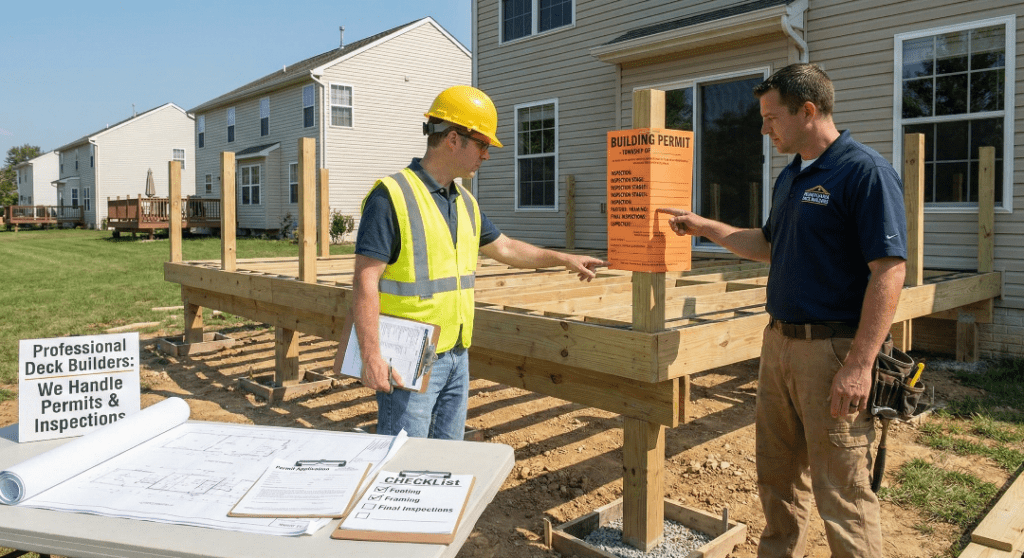
Confirm permit responsibilities. Ask who pulls the permit — the contractor should, in most cases. A contractor who asks the homeowner to pull permits is often trying to shift legal liability.
Communicate your expectations clearly before work begins. Discuss work hours, site cleanup standards, and how decisions will be made if unexpected issues arise (rotted ledger boards, difficult footings, etc.).
Comparing Types of Deck Contractors
Not every company that builds decks operates the same way. Understanding the differences helps you match the contractor type to your project’s complexity and budget.
| Contractor Type | Best For | Typical Strengths | Watch Out For |
|---|---|---|---|
| Full-service deck construction companies | Large or complex projects, multi-level decks | In-house design, permit handling, full crews | Higher base cost; may subcontract some work |
| Small local deck builders | Mid-size projects, personal service | Owner often on-site, competitive pricing | Limited availability during peak seasons |
| General contractors offering deck services | Deck plus other remodeling in one contract | Single point of contact for multiple projects | May subcontract deck work to unfamiliar crews |
| Handyman / unlicensed builder | Very small repairs only | Lowest upfront cost | No permits, no recourse, potential code violations |
If you need a structurally complex deck attached to your home and want full permit and warranty coverage, choose a licensed, full-service deck construction company or a well-vetted local builder. If you need a small freestanding platform, a reputable small local builder may offer better value than a large company.
Hiring a Local Deck Builder vs. a Large Regional Company
PROS of Local Deck Builders
- Familiar with local permitting offices and inspectors
- Often more responsive and personally accountable
- Easier to visit completed projects nearby
- Scheduling flexibility during shoulder seasons
- Community reputation at stake on every job
CONS of Local Deck Builders
- May have longer wait times if owner-operated
- Design resources may be limited
- Less financial backing for large projects
- Warranty follow-through varies widely
- Harder to verify track record for complex builds
Do’s and Don’ts When Hiring Custom Deck Builders
DO:
- Verify the contractor’s license number with your state
- Get everything in writing before work starts
- Pay according to a milestone schedule, not upfront
- Request proof of insurance directly from the insurer
- Ask about the specific crew doing the work
- Confirm permit responsibility in the contract
DON’T:
- Pay more than 10–15% as a deposit before work begins
- Choose the lowest bid without understanding why it’s low
- Hire based on a door-to-door solicitation alone
- Skip checking references even when pressed for time
- Sign a contract without a clear completion date
- Ignore your gut if communication feels off early
Red Flags You Should Never Ignore
⚠️ Warning: Many homeowners who lose money on deck projects report that warning signs appeared before they signed — and they ignored them. Do not rationalize away the following signals.
When evaluating deck contractors near you or deck installation companies in your area, watch for these specific problems:
- No physical business address. A contractor who operates only through a cell phone and a Facebook page has no accountable presence if things go wrong.
- Pressure to decide immediately. High-pressure tactics (“This price is only good today”) are a manipulation tactic, not a legitimate business practice.
- Request for large cash payments upfront. Legitimate deck building services near you will accept checks or financing and will not require most payment before materials are ordered.
- No written contract or vague contract language. A one-page contract with no materials list is essentially unenforceable.
- Inability to provide proof of insurance. If a worker is injured on your property and the contractor lacks workers’ comp, you may be held liable.
- Unusually low quote with no explanation. A bid 30–40% below all others almost always signals substandard materials, unlicensed labor, or both.
- Reluctance to pull permits. Deck construction companies in Pennsylvania and most states are required to pull permits for attached decks. Skipping permits can result in forced demolition at your expense.
The Doylestown Deck Project
A homeowner in Bucks County, Pennsylvania, received four bids for a 400-square-foot composite deck. Three bids ranged from $28,000 to $34,000. The fourth came in at $16,500 with a handwritten contract. Attracted by the price, the homeowner signed — only to discover midway through the project that no permit had been pulled, the footings were undersized for the soil conditions, and the contractor disappeared after receiving 60% payment upfront. The homeowner ultimately paid a licensed deck contractor an additional $22,000 to demolish and rebuild the structure to code. The final cost was nearly double the highest original bid. This outcome, while hypothetical, reflects patterns that state attorney general offices and the Better Business Bureau document regularly.
Matching the Right Builder to Your Project
If your project involves an attached deck over 200 square feet, a rooftop deck, or any elevated structure, choose a licensed deck contractor with documented experience building to local structural codes. The stakes for structural failure are too high to compromise on credentials.
If you need a small freestanding ground-level platform in a low-regulated municipality, a well-reviewed small local builder may offer equivalent quality at a better price point — provided they still carry insurance and produce a written contract.
Material Choices and How They Affect Your Contractor Search
The material you select can narrow your contractor pool. Composite decking brands like Trex, TimberTech, and Fiberon have certified installer programs; working with a certified installer often provides extended product warranties. Not every deck contractor near you will hold these certifications — it is worth asking before requesting bids if material warranty matters to you.
Pressure-treated lumber remains the most widely supported material across all contractor types and is the standard for structural framing regardless of surface decking choice. Hardwood species like ipe or cumaru require contractors experienced with pre-drilling and appropriate fastener systems — skills that not every general deck crew will have.
Pennsylvania-Specific Considerations
If you are searching for professional deck builders in Pennsylvania, particularly in Bucks County and surrounding counties, be aware that municipalities vary considerably in their permit requirements and setback rules. Some townships require stamped engineering drawings for elevated decks; others have simplified review for smaller structures. The best deck builders in Bucks County will know these local rules intimately and will factor permit timelines into their project schedule — a sign of genuine local experience rather than a company operating across a wide, non-specific region.
Pennsylvania’s Home Improvement Consumer Protection Act (HICPA) requires contractors doing work over $500 to be registered with the state. Always verify registration at Pennsylvania’s official contractor lookup portal before signing.
Quick Answers — Frequently Asked Questions
What should I look for in custom deck builders near me?
Look for a valid state contractor’s license or registration, proof of general liability and workers’ compensation insurance, verifiable references from recent projects, and a willingness to provide a detailed written contract. Local reputation and permit knowledge matter as much as price.
How many bids should I get for a deck project?
Get at least three written bids from licensed deck contractors. Fewer bids give you insufficient market data; more than five can become unmanageable to compare meaningfully. Ensure each bid uses the same materials and scope so comparisons are accurate.
Do deck contractors in Pennsylvania need to be licensed?
Pennsylvania requires home improvement contractors to register under the Home Improvement Consumer Protection Act (HICPA) for projects over $500. Always verify registration through the Pennsylvania Attorney General’s Office before signing a contract.
Who is responsible for pulling a deck permit?
In most cases, the contractor should pull the permit as part of their service. A contractor who insists the homeowner pull the permit may be attempting to shift legal liability to you. Confirm permit responsibility in writing before work begins.
How much should I pay as a deposit to a deck contractor?
Industry guidance from consumer protection agencies suggests keeping upfront deposits to 10–15% of the total project cost. Larger deposits reduce your financial leverage if problems arise. A milestone-based payment schedule is the safest structure.
What is the difference between composite and pressure-treated decks?
Pressure-treated lumber is wood chemically preserved against rot and insects; it is generally less expensive upfront but requires periodic staining or sealing. Composite decking uses wood fiber and recycled plastic; it costs more initially but typically requires less maintenance over its lifespan.
How long does it take to build a custom deck?
A standard residential deck typically takes one to three weeks of active construction, depending on size and complexity. Permit approval timelines vary by municipality and can add days to weeks before work begins. Your contractor should provide a realistic schedule in writing.
What warranty should a professional deck builder offer?
Reputable deck construction companies typically offer a workmanship warranty of one to two years, separate from the manufacturer’s warranty on materials. Get warranty terms in writing and understand exactly what is and is not covered before signing.
Glossary of Terms
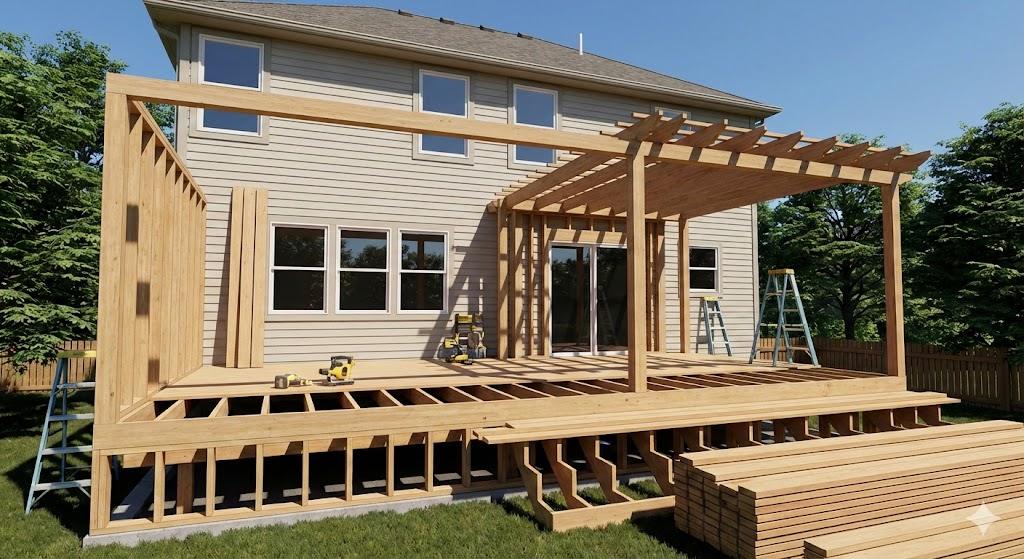
Ledger Board: A horizontal board bolted directly to the house framing that supports an attached deck. Proper ledger attachment is one of the most structurally critical and code-regulated elements of any deck build, consistent with industry-standard deck construction guidelines.
Frost Line: The depth at which ground moisture freezes in a given region. Deck footings must be set below the frost line to prevent heaving; this depth varies by geography and is established in local building codes.
Change Order: A formal written document that modifies the original contract when the scope, cost, or timeline of a project changes. Every change to the original plan — however small — should be documented in a signed change order.
HICPA (Home Improvement Consumer Protection Act): Pennsylvania’s law requiring home improvement contractors to register with the state and meet specific contract and disclosure standards. It provides homeowners with legal recourse against unregistered contractors.
Conclusion: Your Deck, Your Decision
A well-built deck can add thousands of dollars to your home’s value, extend your usable living space, and become the center of outdoor life for years to come. A poorly built one — put together by an unlicensed crew without permits or a real contract — can cost far more to fix than it ever would have cost to do right the first time.
The process of hiring qualified custom deck builders is not complicated, but it requires diligence. Verify licenses. Get multiple bids. Read every line of the contract. Ask about permits. Check references. And trust the pattern of information more than any single sales pitch or unusually attractive price.
Whether you are working with deck installation companies in Bucks County, Pennsylvania, or searching for deck building services anywhere in the country, the standards are universal: credentials, communication, and a clear written agreement are the foundation of every successful project.
Ready to get started? Use the steps in this guide to prepare your project scope, then reach out to licensed deck contractors near you for written bids. Your future deck starts with the right conversation.