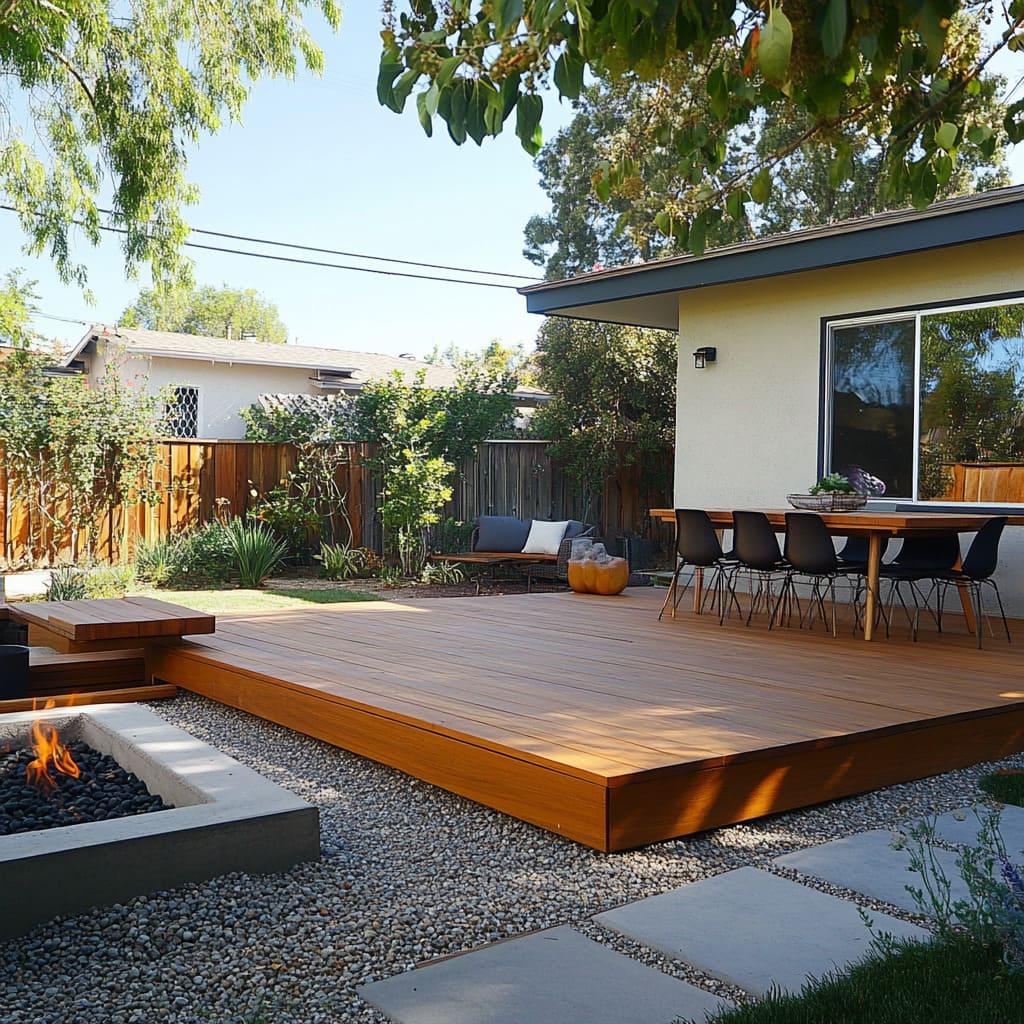
When you think about adding a deck to your Pennsylvania home, you probably picture a structure bolted directly to the back of your house. But what if your deck didn’t need to be attached to your home at all?
This idea is where many homeowners get excited. The concept of a deck that is simpler, more flexible, and can be placed anywhere in your yard is a game-changer. This is the power of a floating deck.
But is it the right choice for your home?
This guide will break down everything you need to know. We’ll explore the definition of a floating deck, compare it head-to-head with a traditional attached deck, and help you decide which is the perfect fit for your backyard.
What Exactly is a Floating Deck?
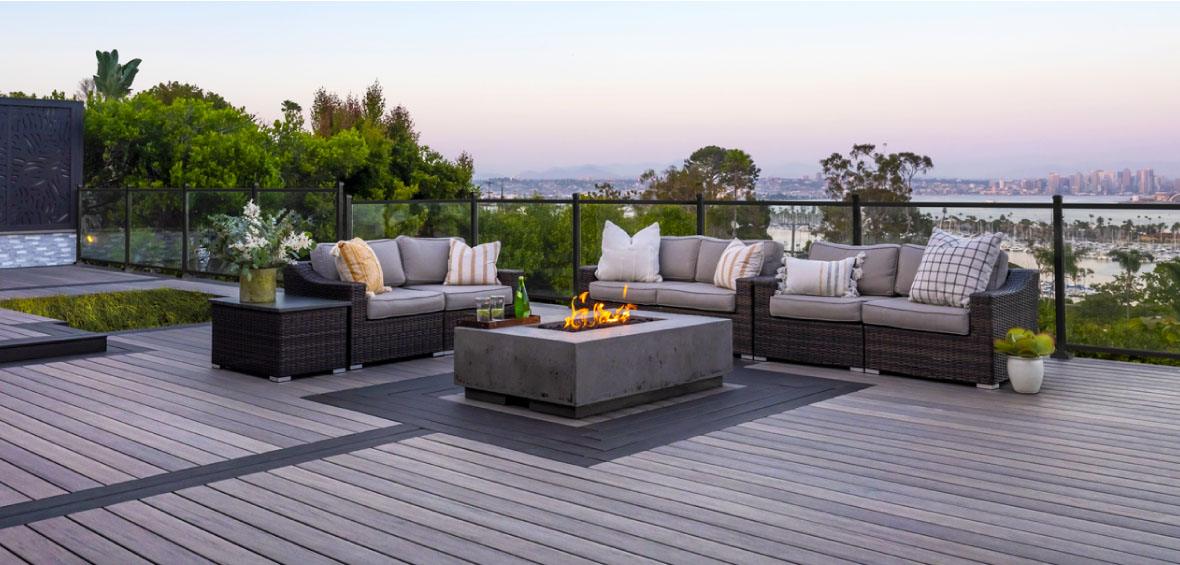
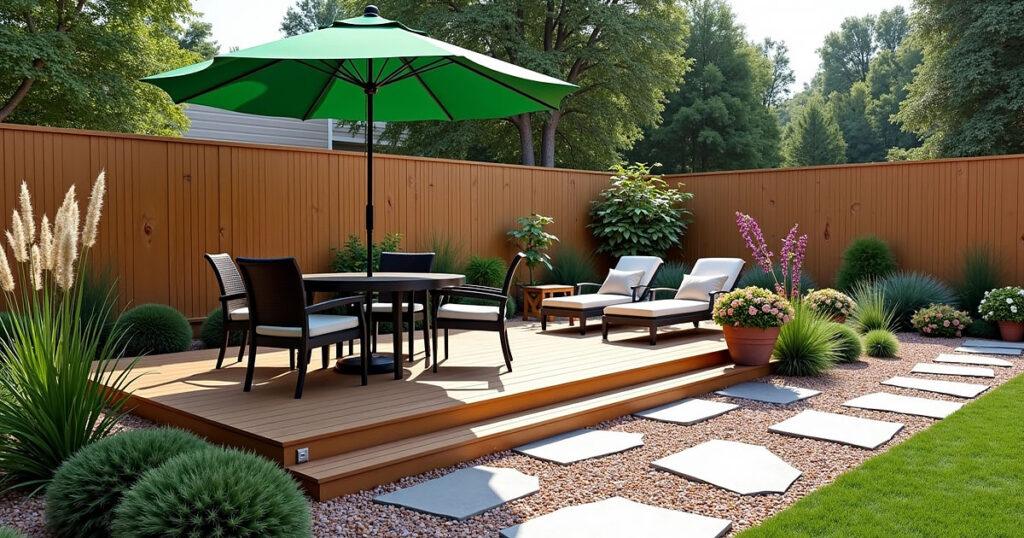
A floating deck, also known as a freestanding deck, is a deck that is not physically attached to your house or any other structure.
It’s a common misconception that “floating” means it’s built on water or moves. Not at all. It gets its name because it “floats” on or just above the ground. Its entire structural support system is independent.
Instead of being anchored to the house with a ledger board, a floating deck’s frame rests on a foundation of concrete blocks, gravel pads, or pre-cast footings placed directly on the ground. This makes it a popular choice for ground-level patios and backyard destinations.
The Traditional Choice: The Attached Deck
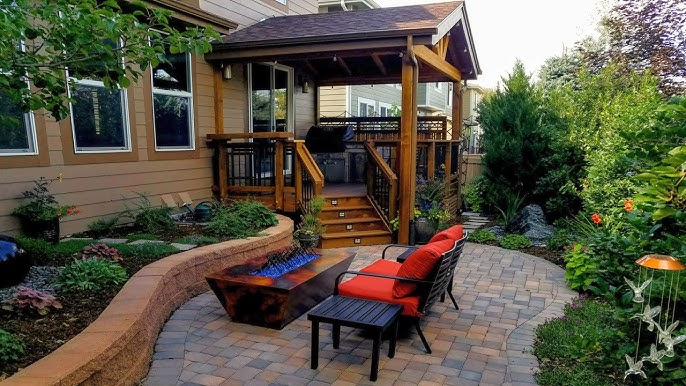
An attached deck is the classic design most of us are familiar with. It is physically connected to the house, most commonly with a piece of lumber called a “ledger board.”
This ledger board is bolted directly into the home’s foundation or rim joist, making the deck a permanent extension of the house. This design is the standard for elevated and second-story decks that provide a seamless transition from your indoor living space.
Because it relies on the house for partial support, its construction is more complex. It requires proper flashing to prevent water from getting between the deck and the house—a critical step to prevent rot and structural damage.
Floating Deck vs. Attached Deck: A Head-to-Head Comparison
The best way to understand the differences is to see them side-by-side. Both options have their place in modern backyard deck designs, but they serve different needs.
Here is a simple breakdown:
| Feature | Floating Deck (Freestanding) | Attached Deck |
| Attachment | Not attached to the house. Stands on its own. | Bolted directly to the house structure (ledger board). |
| Foundation | Rests on ground-level footings (e.g., concrete blocks, gravel pads). | Relies on concrete piers/footings and the house. |
| Typical Height | Ground-level (typically under 30 inches). | Can be any height, from ground-level to second-story. |
| Permits | Sometimes not required if under a certain size/height. | Almost always required due to structural connection. |
| Best For | DIY projects, sloped yards, separate seating areas, poolside. | Seamless indoor-outdoor flow, elevated views, main-entry decks. |
| Cost | Generally more affordable and less labor-intensive. | Higher cost due to complex labor, permits, and materials. |
| PA Frost Heave | More susceptible to slight shifting with frost unless built on deep footings. | Very stable, as it’s anchored to the house and deep footings. |
The Pros and Cons of a Floating Deck
A floating deck is an incredibly versatile option, but it’s important to understand its specific advantages and limitations, especially here in Pennsylvania.
Why Choose a Floating Deck? (The Pros)
- Flexible Placement: You can build one anywhere! Want a small island retreat at the far end of your yard? A quiet yoga platform under a tree? A floating deck makes it possible.
- Simpler Installation: By not attaching to the house, you skip the most complex and high-risk part of deck building: the ledger board and flashing.
- Fewer Permit Headaches: In many Pennsylvania townships, a freestanding deck under 30 inches tall and under a certain square footage may not require a building permit. (Always check with your local municipality first!)
- Great for Sloped or Uneven Ground: It’s often easier to build a floating deck platform over a tricky, uneven part of your yard than it is to grade the entire area.
- DIY-Friendly: Because the engineering is less complex, a ground-level floating deck is a more approachable project for a skilled DIYer.
What to Watch Out For (The Cons)
- Limited Height: These decks are designed to be low-profile. If you want a second-story deck, a floating deck is not the right choice.
- Potential for Shifting: Because it rests on the ground, a floating deck is more susceptible to movement from the frost-thaw cycle (frost heave) in our PA winters. This can be minimized with a proper gravel base and footings, but it’s a key consideration.
- Not a “Part” of the House: If you want that perfect, seamless step from your kitchen to your deck, a separate floating deck won’t provide that.
The Pros and Cons of an Attached Deck
This is the industry standard for a reason. When you want your deck to be a true extension of your home, an attached deck is the way to go.
Why Stick with an Attached Deck? (The Pros)
- Seamless Indoor-Outdoor Flow: This is the biggest advantage. An attached deck, especially one at the same level as your door, truly combines your indoor and outdoor living spaces.
- Rock-Solid Stability: When built correctly and anchored to your home and deep concrete footings (below the frost line), an attached deck is exceptionally stable and permanent.
- Perfect for Elevated Decks: This is the only safe way to build a deck off a second-story or for a walk-out basement.
- Adds Clear Home Value: A well-built attached deck is a major selling point and is seen by appraisers as a direct, valuable addition to the home’s square footage.
The Downsides of Attached Decks (The Cons)
- Complex Installation: Building a deck that attaches to your home is a major construction project. It requires excavation, deep footings, and precise connections.
- High Risk if Built Improperly: The connection point (the ledger board) is the number one source of deck failure and water damage to a home. It must be installed and flashed perfectly. This is not a project for a beginner.
- Permits are a Must: You will absolutely need a permit. This involves submitting detailed plans and passing multiple inspections to ensure it’s built to code.
Common Questions About Building a Deck in Pennsylvania
We’ve built hundreds of decks in Bucks and Montgomery counties, and we hear the same great questions from homeowners time and time again.
Do I really need a permit for a floating deck in PA?
It depends, but you must always check.
In Pennsylvania, building codes are enforced at the local (township or borough) level. A common rule is that a freestanding deck under 30 inches in height and under 200 square feet may not require a building permit.
However, this is not a universal rule. Your local municipality may have stricter requirements. Trying to skirt the permit process can lead to fines, tear-downs, and major problems when you try to sell your home. A professional builder (like us!) will handle the entire permit process, so you know your deck is safe and legal.
Can a floating deck be made of composite material?
Absolutely! And it’s a fantastic idea.
A floating deck is a perfect candidate for low-maintenance composite decking like Trex or TimberTech. Because it’s so close to the ground, a floating deck is more exposed to moisture, soil, and pests.
- Wood in this environment can rot, warp, and be attractive to termites.
- Composite is resistant to rot, moisture, and insects. You get the beauty of a deck without the constant staining and sealing, which is a huge win for a ground-level structure.
How does a floating deck handle Pennsylvania winters?
This is the most important technical question for our climate. The key is the foundation.
If you just place deck blocks on top of the grass, yes, your deck will heave and shift every winter. This is caused by frost heave. A professionally built floating deck is different.
We build them on a solid, excavated base of compacted crushed stone or on concrete footings that go below the frost line. This provides a stable foundation that significantly minimizes movement, keeping your deck level and secure for decades.
Your Perfect Deck: Attached or Floating?
So, what’s the final verdict?
There is no single “best” answer. The right deck for you depends entirely on your home, your yard, and your goals.
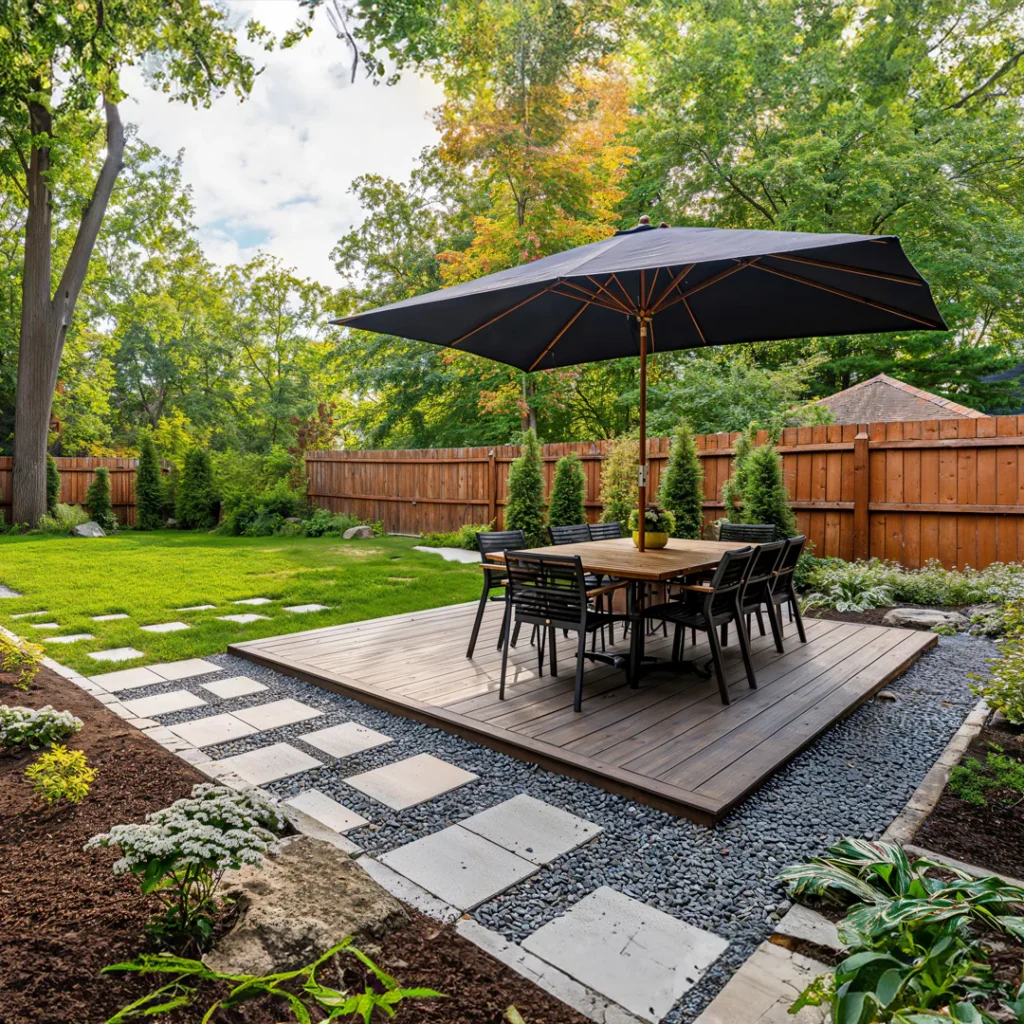
- Choose a floating deck if you want a flexible, ground-level oasis, have a sloping yard, or are looking for a more cost-effective solution away from the house.
- Choose an attached deck if you want a seamless extension of your home, need an elevated or second-story deck, and view it as a permanent, high-value addition.
The most important step in building a deck is partnering with an expert who understands Pennsylvania’s unique soil, climate, and building codes.
We’ve built hundreds of decks in Bucks and Montgomery counties, and we’ve helped homeowners navigate this exact choice.
Ready to explore your options and get a clear plan for your backyard?
Contact us today for a free design consultation, and let’s build your dream deck together.
What did you think of this article? Do you have a floating deck, or are you considering an attached one? Leave a comment below and share your experience!