Choosing the right deck builder transforms your outdoor space into a valuable extension of your home. Pennsylvania homeowners face dozens of options when searching for deck contractors near me, but not all builders deliver the same quality, professionalism, or value. This comprehensive guide walks you through the critical factors that separate exceptional deck construction companies from mediocre ones, helping you make an informed decision that protects your investment and ensures long-lasting results.
Key Takeaways
- Best deck builders carry proper licensing, insurance, and provide detailed written estimates before starting work.
- Licensed deck contractors in Pennsylvania must comply with state building codes and obtain necessary permits.
- Compare at least three local deck builders to understand market rates and service quality differences.
- Red flags include requests for full payment upfront, lack of references, and absence of written contracts.
- Professional deck installation companies typically complete projects within 2–4 weeks depending on complexity.
- Bucks County homeowners should verify contractors hold Pennsylvania Home Improvement Contractor registration.
Understanding Pennsylvania Deck Building Requirements
Licensing and Registration Standards
Pennsylvania requires deck contractors to register with the Attorney General’s Office as Home Improvement Contractors if they perform work exceeding $5,000. Best deck builders maintain this registration alongside general liability insurance and workers’ compensation coverage. When evaluating deck building services near me, verify registration status through the Pennsylvania Office of Attorney General website.
Licensed deck contractors demonstrate commitment to professional standards and consumer protection. They understand local building codes, which vary across Pennsylvania municipalities. For instance, Philadelphia requires permits for decks attached to structures, while some rural counties have different thresholds.
Insurance Requirements Matter
Professional deck builders Pennsylvania carry three types of coverage:
- General liability insurance protects against property damage during construction
- Workers’ compensation covers employee injuries on your property
- Builder’s risk insurance safeguards materials and work in progress
Request certificates of insurance before signing contracts. This documentation proves current coverage and names you as an additional insured party during the project.
How to Compare Deck Contractors: A Step-by-Step Process
Follow this systematic approach when evaluating deck installation companies:
Step 1: Create Your Shortlist
Research 5–7 local deck builders through online reviews, neighborhood references, and professional associations like the National Association of Home Builders. Focus on contractors with established Pennsylvania presence—typically five or more years in business.
Step 2: Request Detailed Estimates
Contact at least three contractors for on-site consultations. Professional estimates should include material specifications, labor costs, project timeline, payment schedule, and warranty terms. Vague quotes lacking itemization signal potential problems.
Step 3: Verify Credentials
Check each contractor’s:
- Pennsylvania Home Improvement Contractor registration number
- Better Business Bureau rating and complaint history
- Online reviews across multiple platforms
- Professional association memberships
Step 4: Review Past Projects
Request photos of completed decks similar to your vision. Best deck builders Bucks County and surrounding areas maintain portfolios showcasing various styles, materials, and complexity levels. Ask to visit recent job sites if possible.
Step 5: Interview References
Speak with three recent clients about their experience. Ask specific questions about communication, problem-solving, timeline adherence, and post-completion support.
Step 6: Compare Contracts
Examine contract terms carefully. Professional agreements specify materials by brand and grade, payment schedules tied to milestones, change order procedures, and dispute resolution processes.
Step 7: Assess Communication Quality
Note responsiveness during the estimation phase. Contractors who promptly answer questions and provide clear explanations typically maintain this standard throughout construction.
Deck Builder Comparison Table
| Factor | Top-Tier Builders | Mid-Range Builders | Budget Builders |
|---|---|---|---|
| Licensing | Full PA registration + specialty certifications | PA registration only | Sometimes unregistered |
| Insurance | Comprehensive coverage with proof | Basic liability insurance | May lack proper coverage |
| Warranty | 5–10 years structural, 2–5 years workmanship | 1–3 years limited | Minimal or none |
| Timeline | Detailed schedule with milestones | General timeframe provided | Vague completion dates |
| Materials | Premium brands, multiple options | Standard materials, limited choice | Lowest-cost options only |
| Communication | Dedicated project manager | Direct contractor contact | Inconsistent availability |
| Pricing | Higher initial cost, better value | Competitive mid-range | Lowest bids, potential hidden costs |
Red Flags When Hiring Deck Contractors
Warning Signs to Avoid
Certain behaviors indicate unprofessional or potentially fraudulent deck construction companies Pennsylvania. Protect yourself by recognizing these red flags:
Financial Red Flags:
- Demands for 50% or more payment upfront (industry standard: 10–30%)
- Cash-only payment requirements
- Pressure to sign contracts immediately
- Unusually low bids compared to market rates
- Reluctance to provide written estimates
Operational Red Flags:
- No physical business address or local references
- Lack of proper insurance documentation
- Unwillingness to obtain required permits
- Vague timelines or material specifications
- No written warranty or guarantee
Professional Red Flags:
- Poor communication or delayed responses
- Inability to explain building code requirements
- No examples of previous work
- Negative patterns in online reviews
- Unlicensed subcontractors
If contractors exhibit multiple warning signs, eliminate them from consideration regardless of pricing.
Material and Design Considerations
Choosing the Right Decking Material
Deck building services near me offer various material options, each with distinct advantages:
Pressure-Treated Lumber
The most economical choice, pressure-treated wood requires regular maintenance but provides reliable performance for 15–20 years. Southern Yellow Pine dominates Pennsylvania markets due to availability and cost-effectiveness.
Composite Decking
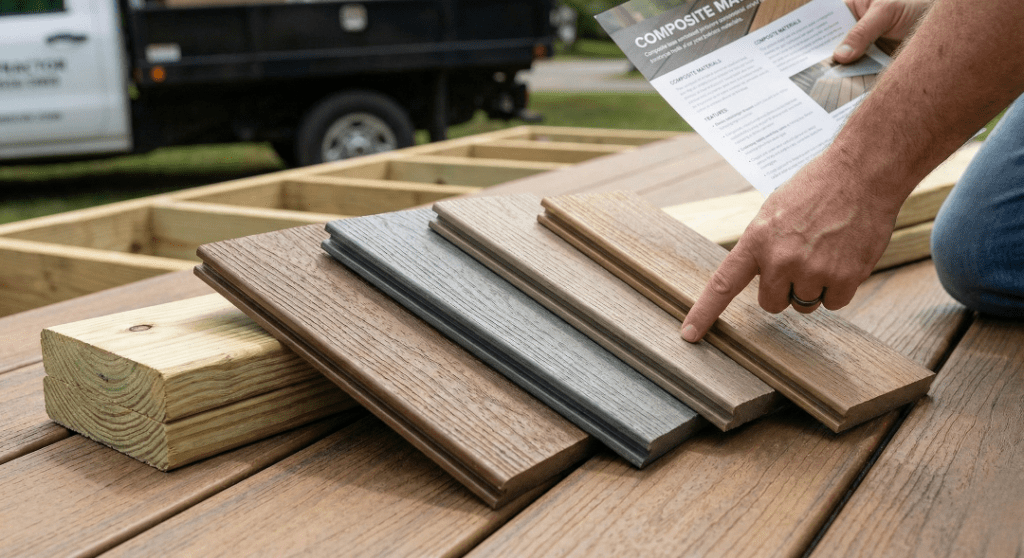
Manufactured from wood fibers and plastic, composite materials resist rot, insects, and warping. Premium brands offer 25–50 year warranties and minimal maintenance requirements. Initial costs run 2–3 times higher than treated lumber. For a deeper look at modern options, see our 2026 guide to decking materials.
Hardwood Decking
Species like Ipe, Tigerwood, and Cumaru deliver exceptional durability and natural beauty. These dense hardwoods last 40+ years but require specialized installation skills and represent the highest material investment.
PVC Decking
Entirely synthetic PVC boards provide maximum moisture resistance and color retention. They work well in high-humidity areas but may feel less natural underfoot compared to wood-based products.
Design Features That Add Value
Professional deck builders recommend these elements for enhanced functionality:
- Multi-level designs create visual interest and define separate outdoor zones—explore inspiring multi-level deck ideas
- Built-in seating maximizes space efficiency and eliminates furniture costs
- Pergolas or shade structures extend usability during hot Pennsylvania summers
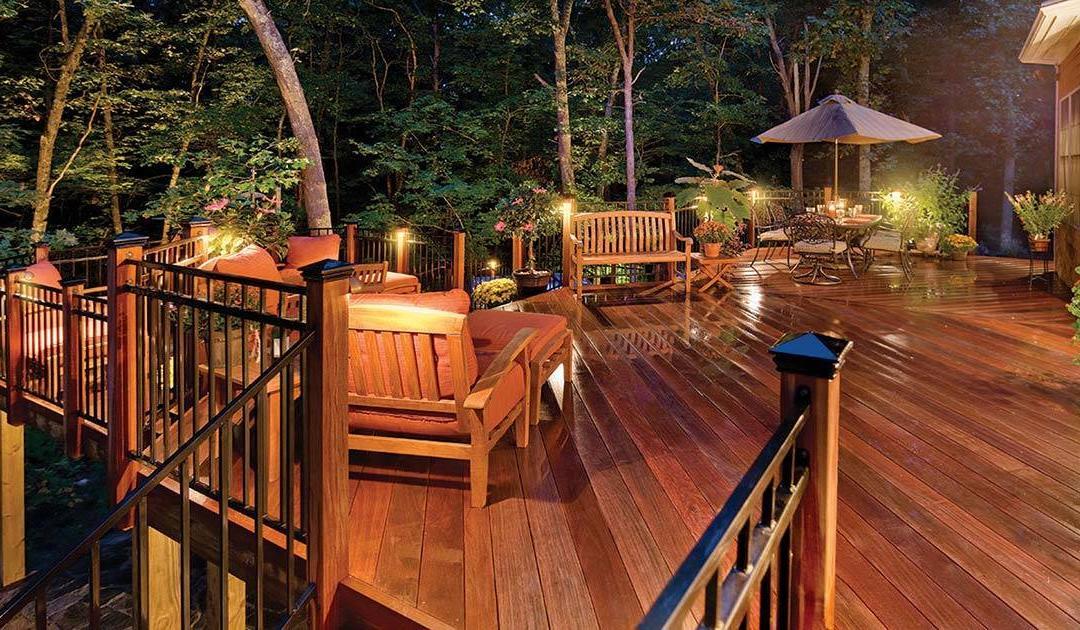
- Integrated lighting improves safety and ambiance for evening use—learn more in our homeowner’s guide to deck lighting
- Proper drainage systems protect underlying structures and prevent water pooling
Pricing Structures: What to Expect
Understanding Cost Breakdowns
Deck installation companies Pennsylvania typically charge based on square footage, material selection, and design complexity. According to industry experts, homeowners should expect these general ranges:
Basic Deck Projects:
Entry-level pressure-treated decks with simple rectangular designs represent the most affordable option. These projects include standard railings, basic stairs, and minimal custom features.
Mid-Range Projects:
Composite decking with upgraded railings, multi-level platforms, or integrated features falls into this category. Many Pennsylvania homeowners choose this tier for balanced cost and performance.
Premium Projects:
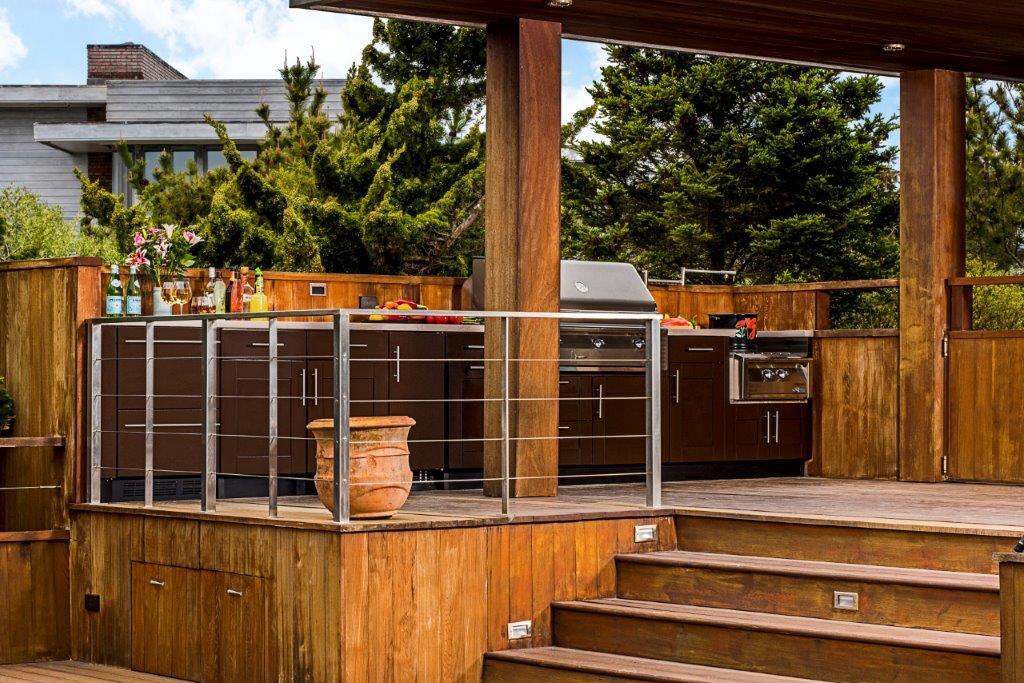
Hardwood materials, complex multi-level designs, custom features like built-in planters or kitchens, and high-end finishes characterize premium deck construction.
Hidden Costs to Anticipate
Professional deck builders include these items in comprehensive estimates:
- Permit fees (varies by municipality)
- Site preparation and grading
- Demolition of existing structures
- Structural upgrades to support new deck weight
- Electrical work for lighting or outlets
- Staining or sealing (for wood decks)
Request itemized quotes that clearly separate material costs, labor expenses, and additional charges. This transparency allows accurate comparison between contractors.
The Do’s and Don’ts of Hiring Deck Contractors
DO:
- Verify licensing through Pennsylvania’s Office of Attorney General before signing contracts
- Request multiple bids to understand fair market pricing in your area
- Read contracts thoroughly and ask questions about unclear terms
- Establish payment schedules tied to project milestones rather than calendar dates
- Document everything including conversations, changes, and agreements in writing
- Inspect work regularly to catch issues early when corrections cost less
DON’T:
- Pay the full amount upfront regardless of contractor requests or discounts offered
- Skip the permit process even if contractors suggest avoiding it saves money
- Accept verbal agreements without written documentation protecting both parties
- Hire unlicensed contractors who cannot legally perform home improvement work in Pennsylvania
- Ignore your instincts if something feels wrong during the hiring process
- Rush the decision based solely on availability or pressure tactics
Pros and Cons of Different Contractor Types
Large Deck Installation Companies
Pros:
- Established systems and processes ensure consistency
- Multiple crews allow flexible scheduling
- Comprehensive insurance coverage protects homeowners
- Purchasing power may reduce material costs
- Brand reputation creates accountability
Cons:
- Higher overhead costs reflected in pricing
- Less personal attention from ownership
- Potential for crew variability affecting quality
- Bureaucratic processes may slow decision-making
Small Local Deck Builders
Pros:
- Direct owner involvement in every project
- Personalized service and communication
- Lower overhead enables competitive pricing
- Flexibility for custom requests and changes
- Strong local reputation drives quality work
Cons:
- Limited crew availability may extend timelines
- Smaller portfolio of completed projects
- Less financial cushion if problems arise
- May lack specialized equipment for complex jobs
Choosing Based on Project Scope
If you need a straightforward deck replacement with standard materials, small local builders often provide excellent value and personalized service. For complex multi-level designs requiring specialized skills or coordinating multiple trades, established deck construction companies Pennsylvania bring valuable experience and resources.
If your project involves extensive structural modifications or integration with existing architecture, choose contractors demonstrating specific expertise in similar work, regardless of company size.
Case Study: Evaluating Three Contractors (Hypothetical Example)
A homeowner in Montgomery County sought quotes for a 400-square-foot composite deck with built-in seating and lighting. Three contractors responded:
Contractor A submitted a detailed 8-page proposal including material specifications, timeline breakdown, and payment schedule. Their price fell in the middle range. References praised communication and quality. They held proper licensing and 10 years of local experience.
Contractor B provided the lowest bid but offered only a one-page estimate lacking material details. When questioned, they suggested “standard materials” without specifics. No verifiable Pennsylvania registration appeared in state records.
Contractor C quoted the highest price with premium composite materials and a 10-year warranty. However, their timeline extended beyond the homeowner’s deadline, and references mentioned communication challenges during projects.
The homeowner selected Contractor A, recognizing that Contractor B’s vague estimate and licensing gaps presented unacceptable risks, while Contractor C’s timeline and communication issues outweighed premium materials. This decision balanced quality, professionalism, and practical project requirements.
Regional Considerations for Pennsylvania Homeowners
Best Deck Builders Bucks County
Bucks County’s mix of historic properties and modern developments requires contractors familiar with both preservation guidelines and contemporary design trends. Many townships enforce strict zoning regulations affecting deck height, setbacks, and materials near historic districts.
Philadelphia Metropolitan Area
Urban and suburban Philadelphia deck contractors navigate complex permitting processes and limited access challenges. Best practices include verifying L&I licensing for Philadelphia city work and confirming contractors understand rowhouse-specific structural considerations.
Central and Western Pennsylvania
Rural areas offer more flexibility in design but require contractors knowledgeable about frost depth requirements and local soil conditions. Well-documented freeze-thaw cycles demand proper footing depth—typically 36–42 inches below grade.
Timeline Expectations for Deck Projects
Professional deck builders provide realistic schedules based on project scope:
Pre-Construction Phase (1–3 weeks):
- Contract finalization
- Permit acquisition
- Material ordering
- Site preparation scheduling
Construction Phase (1–4 weeks):
- Foundation and framing installation
- Decking board installation
- Railing and stair construction
- Finishing details and cleanup
Post-Construction (1 week):
- Final inspection
- Punch list completion
- Warranty documentation
Weather delays, material availability, and inspection scheduling affect timelines. Reputable contractors build buffer time into schedules rather than promising unrealistic completion dates.
Questions to Ask During Contractor Interviews
Asking these questions reveals contractor professionalism and expertise:
- How long have you operated in Pennsylvania, and what percentage of work involves deck construction?
- What is your Pennsylvania Home Improvement Contractor registration number?
- Which building code edition does our municipality enforce, and how does it affect design?
- What material brands do you recommend for our climate and budget?
- Who will supervise daily work, and how do we contact them?
- What happens if we discover rot or structural issues during demolition?
- How do you handle weather delays or material shortages?
- What does your warranty cover, and for how long?
- May we contact three recent clients with similar projects?
- What is your payment schedule, and what protections do we have if work stops?
Quality contractors answer confidently with specific details. Vague responses or irritation at thorough questions suggest problems ahead.
Quick Answers – FAQ Section
What qualifications should the best deck builders have?
Licensed Pennsylvania Home Improvement Contractors with general liability insurance, workers’ compensation coverage, positive references, and documented experience in deck construction specifically.
How much does a professional deck cost in Pennsylvania?
Costs vary significantly based on size, materials, and complexity, but homeowners should obtain at least three detailed estimates to understand fair market pricing in their specific area. See our 2026 deck building cost guide for current benchmarks.
Do I need a permit for deck construction in Pennsylvania?
Most Pennsylvania municipalities require permits for decks attached to structures or exceeding certain height thresholds—professional contractors handle permit acquisition as part of their service.
How long does deck installation take?
Typical residential decks require 2–4 weeks from start to finish, including permitting, though complex designs or weather delays may extend this timeline.
What’s the difference between composite and wood decking?
Composite materials offer lower maintenance and longer warranties but cost more initially, while wood provides natural aesthetics at lower upfront expense but requires regular maintenance. Compare your options in our guide to wood vs. composite decking.
Should I choose the lowest bid?
Not necessarily—unusually low bids may indicate cut corners, inferior materials, or hidden costs that emerge later, so evaluate overall value rather than price alone.
What red flags indicate a bad deck contractor?
Demands for large upfront payments, lack of proper licensing or insurance, no written contracts, vague estimates, and unwillingness to provide references all signal potential problems. Learn more in our list of red flags when choosing local deck builders.
Can deck builders work year-round in Pennsylvania?
Most deck construction occurs April through November when temperatures support concrete curing and comfortable working conditions, though some builders work during mild winter periods.
What warranty should I expect?
Reputable contractors provide structural warranties of 5–10 years and workmanship warranties of 2–5 years, with specific material warranties varying by manufacturer.
How do I verify a contractor’s license in Pennsylvania?
Check the Pennsylvania Office of Attorney General website’s Home Improvement Contractor registry using the contractor’s business name or registration number.
Glossary of Terms
Ledger Board: The horizontal board attached directly to a house that supports one side of an attached deck, requiring proper flashing and fastening to prevent water damage and structural failure.
Joist Spacing: The distance between parallel floor support beams, typically 12 or 16 inches on center, which affects deck strength and determines appropriate decking material spans.
Frost Line: The depth to which ground freezes during winter, requiring deck footings to extend below this level (36–42 inches in Pennsylvania) to prevent heaving and structural damage.
Cantilever: A deck section extending beyond its support beam, limited by building codes to specific percentages of joist length to maintain structural integrity and safety.
Conclusion
Selecting the best deck builders in Pennsylvania requires systematic evaluation of credentials, experience, and professionalism. By verifying licensing, comparing detailed estimates, checking references, and recognizing red flags, you protect your investment and ensure quality results. The right deck contractor combines technical expertise with transparent communication, delivering outdoor spaces that enhance your home’s value and your family’s enjoyment for decades.
Don’t settle for the first estimate or the lowest bid. Take time to compare local deck builders using the criteria outlined in this guide. Your ideal contractor exists—someone who respects your vision, communicates clearly, and builds to the highest standards.
Ready to start your deck project? Request estimates from three licensed deck contractors in your area today, using this guide’s question list and comparison framework to make an informed decision.