You look out your back window and see a beautiful view, but when you step outside, all you have is a steep hill. It’s a common frustration for many Pennsylvania homeowners. That grassy incline is great for sledding in the winter, but for the rest of the year, it’s mostly just unusable space that is difficult to mow.
You might feel stuck with a yard that offers zero room for a grill, a dining table, or a comfortable seating area. But that difficult terrain is actually an opportunity in disguise.
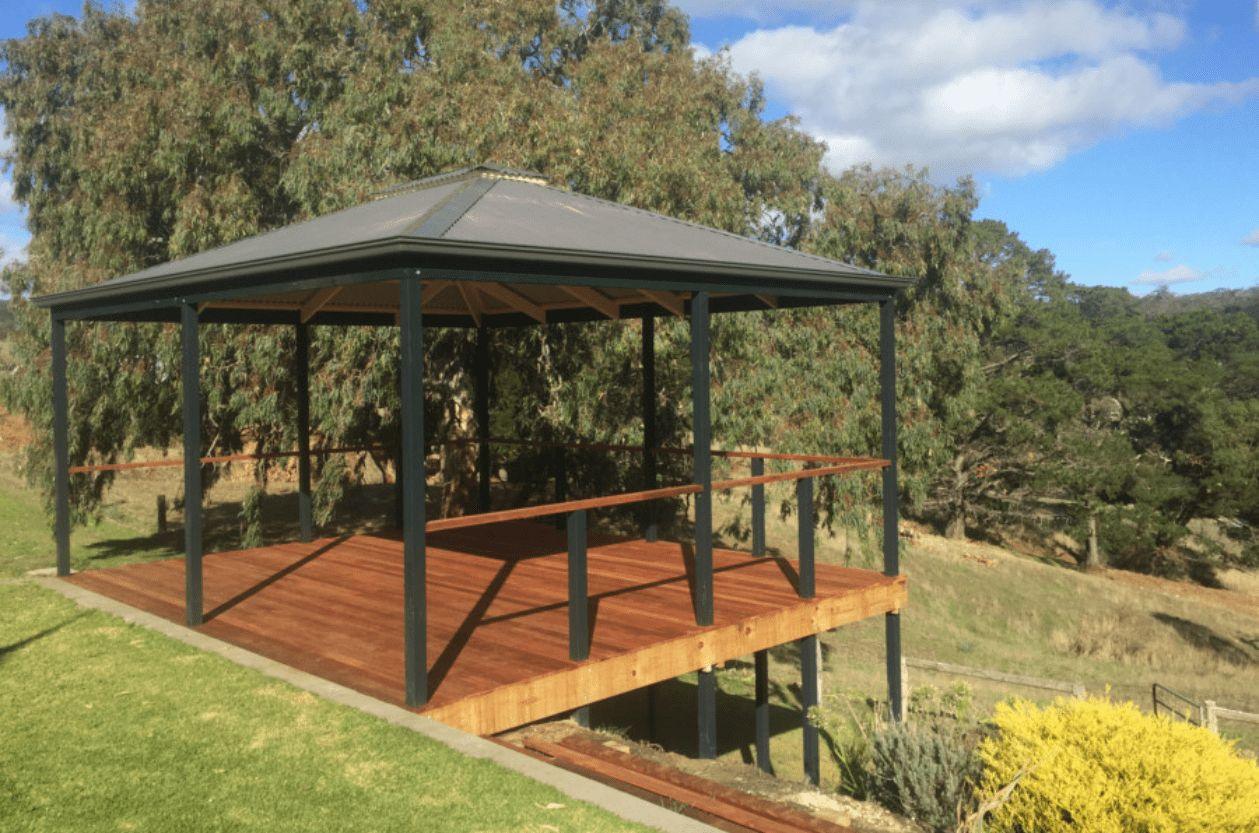
Building a deck on a slope is one of the most effective ways to reclaim your property. It transforms a “useless” hill into a premium outdoor living space. While it requires more engineering and planning than a standard flat-ground project, the payoff is often a spectacular view and a backyard you can actually enjoy.
In this guide, we will walk you through exactly what it takes to conquer that incline. From structural requirements to design inspiration, you will learn how to turn a challenging slope into your home’s best feature.
The Hidden Advantages of a Sloped Yard
It is easy to look at a steep grade and see only dollar signs and headaches. However, sloped yards offer unique benefits that flat yards simply can’t match. When you elevate your outdoor living space, you aren’t just building a platform; you are creating an experience.
Better Views and Breezes
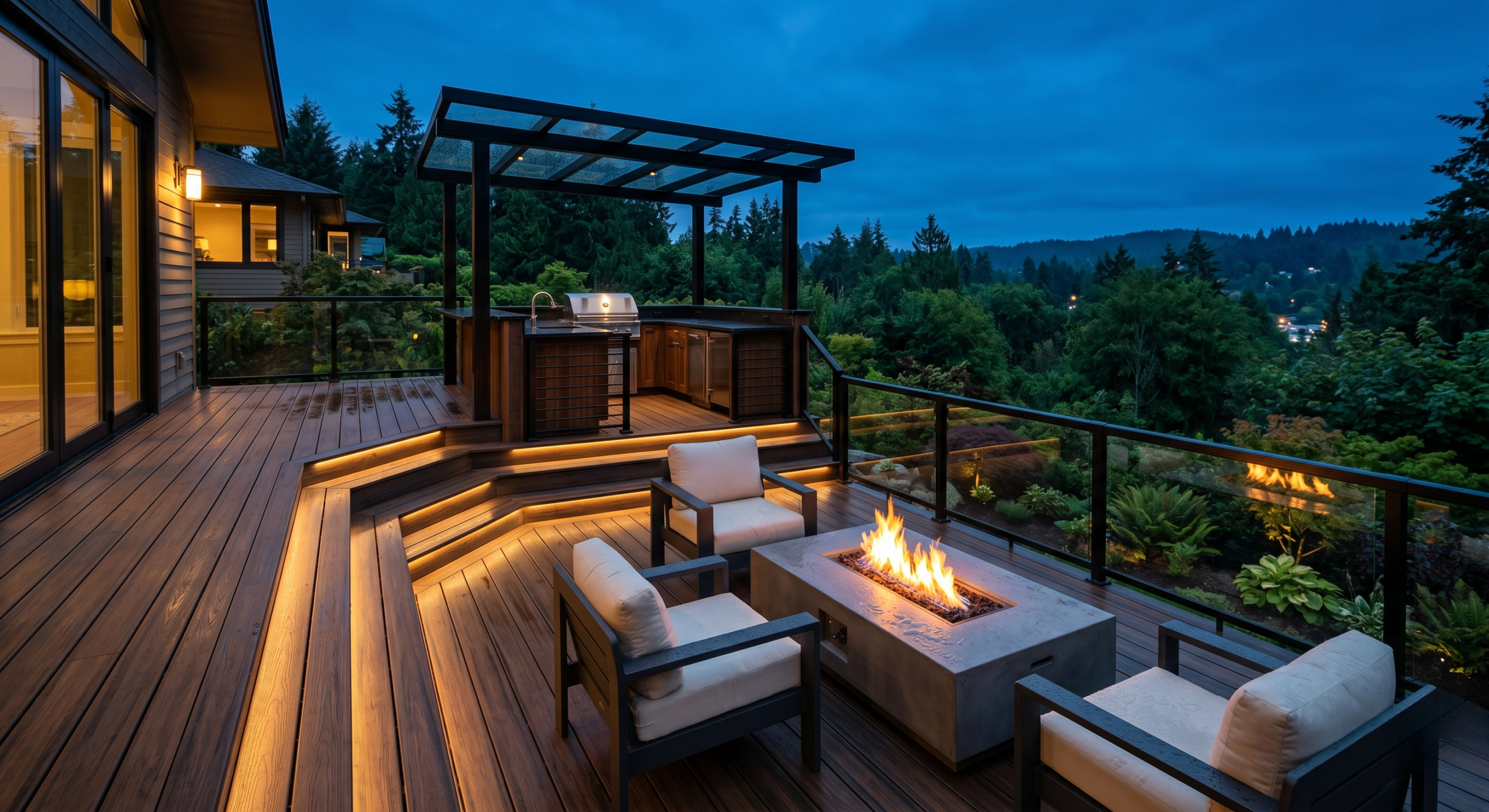
A raised deck puts you above the sightliness of fences and shrubbery. In Bucks and Montgomery counties, where the terrain rolls gently, this often means you get an unobstructed view of the tree line or the sunset. Being higher up also catches better breezes, keeping you cooler during those humid PA summers.
Creating Usable Space from Nothing
On a flat lot, a deck covers existing ground. On a slope, a deck creates new ground. You are essentially adding square footage to your property that didn’t exist before. This is the most efficient way to maximize your lot’s potential without expensive grading or retaining walls.
Understanding the Challenges: It’s All in the Foundation
Before we get to the fun part—choosing decking colors and railing styles—we have to talk about gravity. Building on an incline introduces physical forces that don’t apply to a patio sitting on flat dirt.
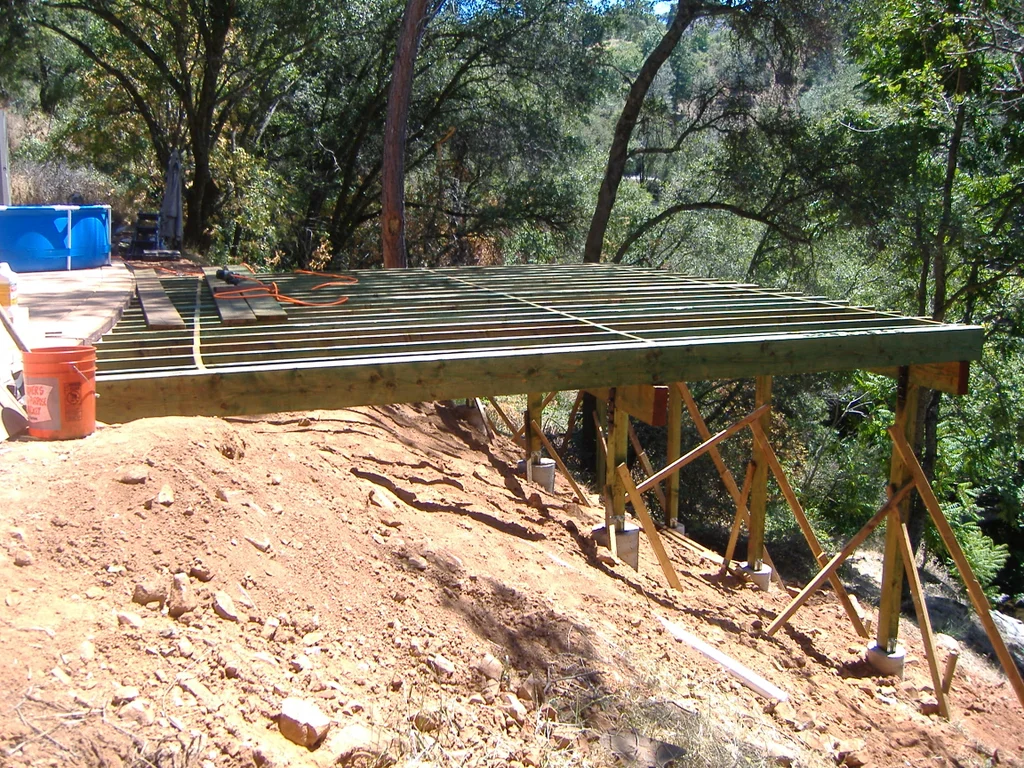
The Importance of Deep Footings
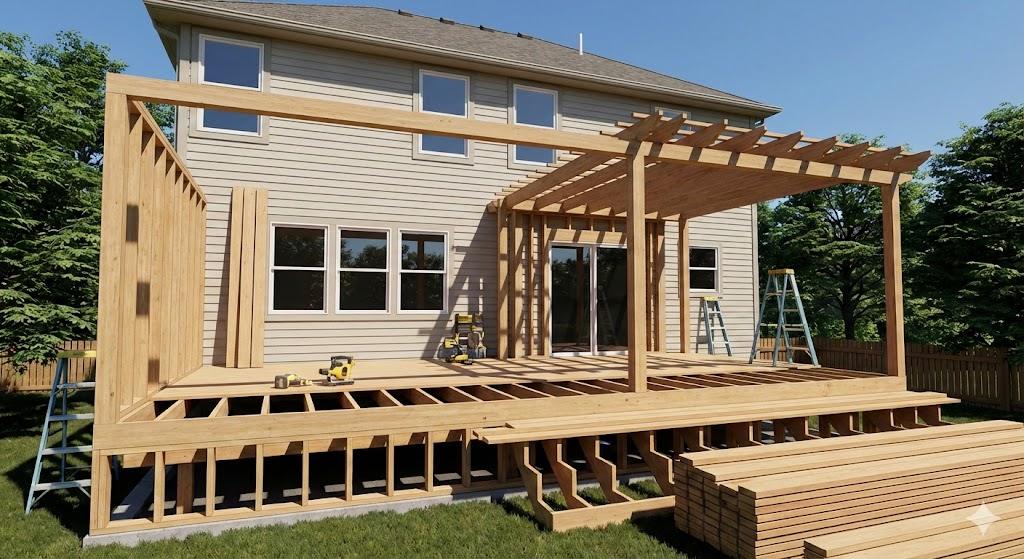
In Pennsylvania, the frost line is a critical factor in deck construction. When the ground freezes, water in the soil expands and can heave posts upward. On a slope, this movement can be disastrous. Your footings need to go deep—typically conforming to 36-inch frost line requirements—to ensure stability.
Because the ground is sloped, the soil on the downhill side offers less lateral support. This often means we need to dig even deeper or use specialized concrete piers to prevent the deck from shifting downhill over time.
Managing Water and Drainage
Water flows downhill. When you sink posts into a slope, you have to ensure that runoff doesn’t wash away the soil supporting them. Proper grading around the base of the posts and using gravel backfill helps manage residential stormwater. If ignored, erosion can compromise the structural integrity of the entire deck.
Design Options for Sloped Yards
One style does not fit all, especially when the ground is uneven. Here are the three most popular approaches we see for building a deck on a slope.
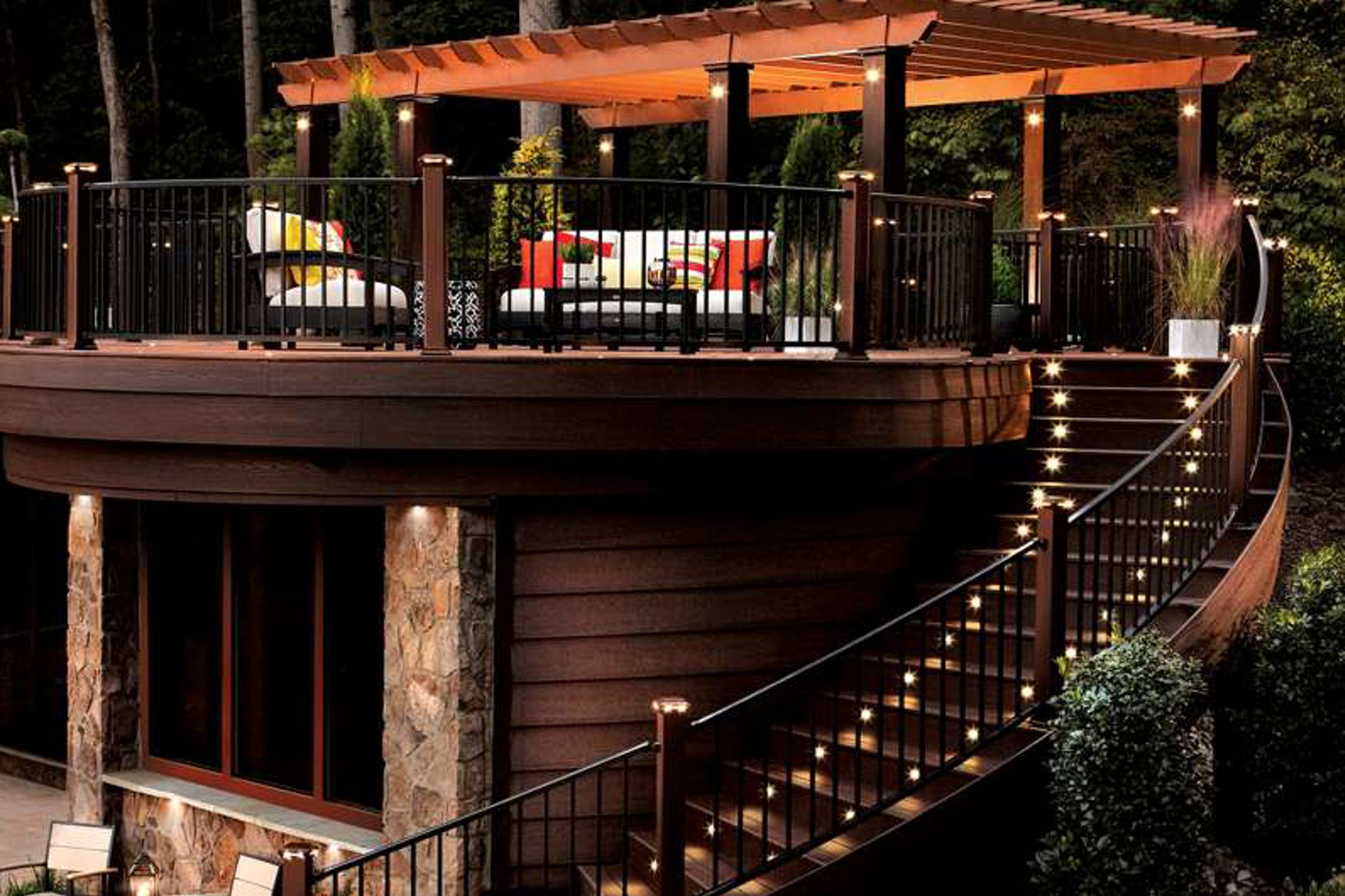
1. The Walk-Out Elevated Deck
This is the most common solution for homes with a walk-out basement or a first floor that sits high above the backyard grade.
- The Look: High posts support the deck, creating a “treehouse” feel.
- The Benefit: It provides a shaded area underneath. If the deck is high enough, you can look into patio deck designs for a dry, secondary living space below.
- Best For: Steep slopes closer to the house.
2. The Multi-Level (Tiered) Deck
If your yard slopes gently away from the house, exploring multi-level deck ideas is a stunning option. Instead of one massive platform, you build distinct zones that step down with the terrain.
- The Look: Visual waterfalls of decking materials.
- The Benefit: It breaks up the space naturally. You can have a dining area on the top tier and a fire pit or hot tub zone on the lower tier. It also reduces the need for extremely long support posts.
- Best For: Long, gradual slopes.
3. The Wraparound Deck
For homes situated on the side of a hill, a wraparound deck can maximize sunlight exposure as the sun moves across the sky.
- The Look: Expansive and grand.
- The Benefit: It connects different entry points of the home, allowing you to access the outdoors from the kitchen, living room, or even a master bedroom.
- Best For: Corner lots or homes with unique architecture.
The “Deck Construction” Difference: Flat vs. Sloped
When you hire professionals, you might notice that the quote for a sloped yard is higher than that for a neighbor’s flat yard. It is important to understand where those costs go. It isn’t just about extra lumber; it is about safety and logistics.
Table: Standard Deck vs. Sloped Deck Requirements
| Feature | Standard Flat Deck | Sloped Deck |
| Foundation | Standard footings; easy excavation. | Deep, reinforced footings; often requires hand-digging if machinery can’t access the slope. |
| Support Posts | Short (2-4 ft); standard 4×4 or 6×6 pressure treated. | Tall (6-12 ft+); often requires 6×6 or larger, plus cross-bracing to prevent swaying. |
| Scaffolding | Usually not required; crew works from the ground. | Required for safety; crew works at heights. |
| Permits & Engineering | Standard approval process. | May require structural engineer review depending on height and soil type. |
| Under-Deck Area | Usually hidden by skirting. | Highly visible; requires aesthetic finishing or drainage systems. |
Selecting the Right Materials
Since a deck on a slope is often more visible from the yard (and the neighbors’ yards), the underside looks just as important as the top.
Composite vs. Wood
We almost always recommend high-quality composite vs. wood decking options for these projects. Why? Because maintaining a wood deck that is 10 feet in the air is difficult. You do not want to be on a tall ladder trying to sand and stain balusters every two years. Composite offers a “set it and forget it” solution that withstands the PA seasons.
Railing Choices
Choosing the right railing is vital since it is the most visible part of your deck from the inside of your house.
- Cable Railing: Perfect for preserving that view you worked so hard to get. The thin cables virtually disappear.
- Glass Panels: The ultimate view-preserver, though they require more cleaning.
- Aluminum Balusters: A classic, sturdy choice that looks great with composite posts.
Why You Need Specialized “Deck Contractors”
We love the DIY spirit, but building a deck on a slope is rarely a do-it-yourself job. The margin for error is slim. If a ground-level patio settles an inch, you get a puddle. If a 10-foot high deck settles an inch, you get a structural failure.
When vetting deck contractors, look for specific experience with uneven terrain. Here is what you should ask:
- “How do you handle excavation on a hill?”
Qualified builders will explain their machinery access or their plan for hand-digging footings if a skid steer can’t make it down the slope. - “What is your plan for lateral bracing?”
Tall decks need diagonal sway bracing. If a contractor doesn’t mention this, it’s a red flag. - “Do you handle the permitting?”
In Bucks and Montgomery counties, building codes are strict regarding prescriptive deck construction codes and post sizes. Your contractor should handle all drawings and township inspections.
Safety Considerations for Elevated Decks
Height brings risk. A deck built on a slope is often technically a “second-story” structure, even if it is attached to the first floor.
Sturdy Railings are Non-Negotiable
Code requires railings to be at least 36 inches high (sometimes 42 inches depending on local statutes) and able to withstand significant force. We ensure every post connection is reinforced with tension ties, not just nails or screws.
Lighting the Way
Stairs on a sloped deck can be long and steep. Integrated riser lights and proper deck lighting are essential for safety at night. We also recommend post-cap lights to define the perimeter of the deck, making it safe for evening entertaining.
Cost Factors to Keep in Mind
Budgeting for a sloped project requires a realistic outlook. To get a clearer picture, you can review our 2025 deck building cost guide. Generally, expect labor costs to be 15-25% higher than a flat-ground build due to the difficulty of staging materials and working at heights.
- Access: Can a truck get to the build site? If materials have to be hand-carried down a hill, labor hours increase.
- Height: Any deck over 6 feet off the ground usually requires larger lumber and more bracing hardware.
- Machinery: Specialized augers may be needed to drill through Pennsylvania’s rocky soil on an angle.
Turning Your Slope into a Sanctuary
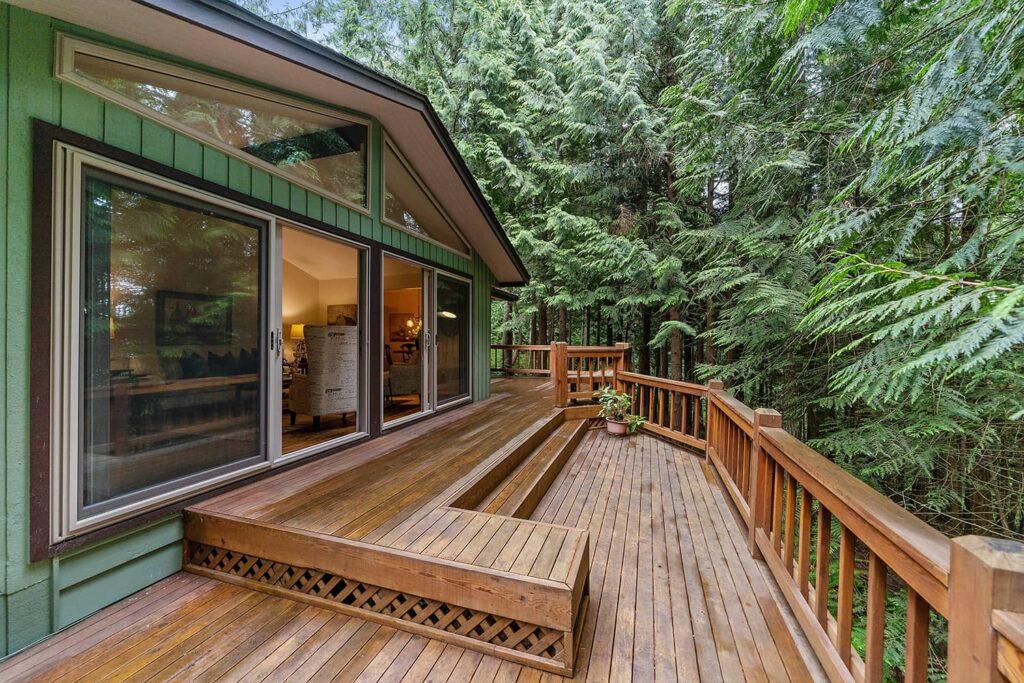
Don’t let a hill dictate how you live. By building a deck on a slope, you are taking control of your landscape. You are trading a mowing headache for a sunset retreat.
Whether you envision a multi-tier entertainment zone or a quiet balcony overlooking the woods, the key is solid engineering and smart design. At Bucks Mont Decks, we are expert deck builders in Bucks County who specialize in navigating the unique terrain of our local region to build structures that last.
Ready to reclaim your backyard?
If you are tired of looking at a hill you can’t use, let’s talk. Contact us today for a consultation, and let’s discuss how we can elevate your outdoor living experience.